

Imagine if your skull became smaller every winter, then began growing again when spring arrived.
It sounds like something from a science-fiction story. Yet some tiny mammals really do make extraordinary physical changes as the seasons change.
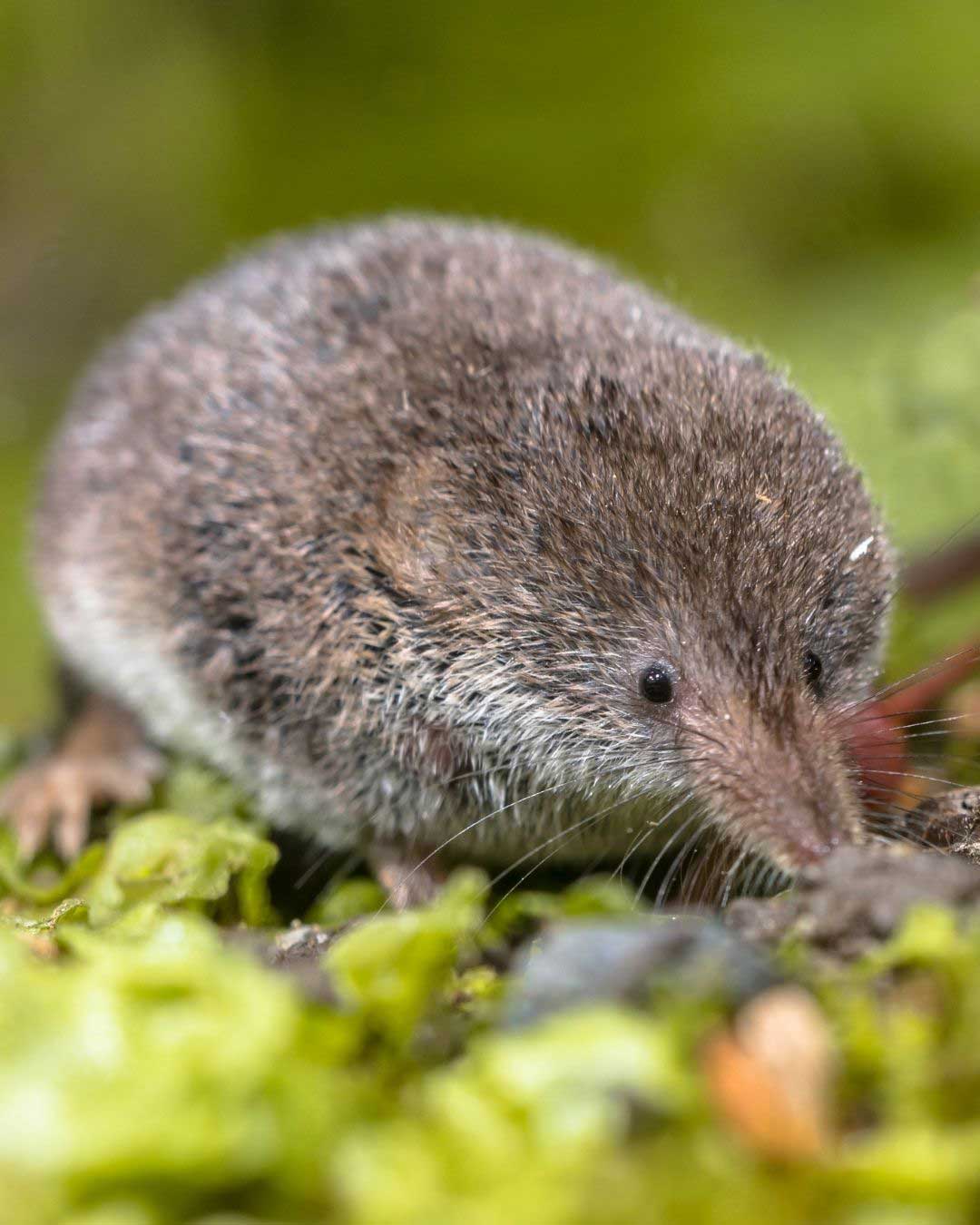
New research from Japan has found that the long-clawed shrew doesn’t simply become smaller during winter. It actually remodels the shape of its skull.
Part of its skull shrinks. Another part gets bigger.
And shrews aren’t the only mammals capable of remarkable seasonal transformations.
For children studying animal adaptations, habitats, survival, evolution and inheritance, these animals provide fascinating real-life examples of the ways living things cope with their environments.
A fascinating animal adaptation for KS2 science
In England, the Year 6 Evolution and Inheritance science curriculum asks children to identify how animals and plants are adapted to suit their environments in different ways.
It also encourages pupils to compare organisms that survive in extreme conditions.
The shrew is a particularly strange example.
Rather than simply growing thicker fur or storing more food, its body appears able to physically reorganise itself as winter approaches.
So how does it work?
The shrew that remodels its own head
The long-clawed shrew, Sorex unguiculatus, lives in north-eastern Asia, including the Japanese island of Hokkaido.
Researchers from Hokkaido University and Toyo University studied 136 shrew specimens collected at different times of year.
They measured the skulls and examined how their shape changed through the seasons.
What they found was unexpected.
During winter, the braincase becomes smaller.
But the front of the skull, called the rostrum and containing the nasal region, actually becomes larger.
Then the pattern changes again in spring.
The researchers have called this newly recognised pattern “reverse Dehnel’s phenomenon”.
They don’t yet know exactly why the nasal region grows.
One possibility is that its changing shape helps with heat exchange and could help protect the brain from very cold incoming air.
That explanation is still a hypothesis and needs further testing.
What is Dehnel’s phenomenon?
Scientists have known for decades that certain small mammals can become physically smaller during winter.
This is known as Dehnel’s phenomenon, named after Polish zoologist August Dehnel.
It doesn’t simply involve an animal losing weight.
Changes can occur in the skull, brain and internal organs.
Then, as winter ends, some of those tissues increase in size again.
Research following individual common shrews found that their braincases decreased in height by an average of around 15% approaching winter.
In spring, they increased again.
The animals’ body mass also fell before rising substantially in spring.
That is quite a transformation for an animal you could almost hide in the palm of your hand.
Why would a shrew make itself smaller?
Being a tiny warm-blooded mammal in winter is difficult.
A small body can lose heat quickly. Food may also become harder to find.
Brains are particularly expensive organs to run because brain tissue needs a continuous supply of energy.
Scientists think that reducing the size of energy-demanding tissues may help animals such as shrews survive periods when food is scarce.
Shrews don’t simply sleep through the problem. They remain active during winter.
One possible solution is therefore to run a slightly smaller body.
Is this really an adaptation?
There is a useful science distinction here.
The shrew doesn’t suddenly evolve a smaller skull during one particular winter.
The seasonal change happening within the individual animal is an example of phenotypic plasticity. Its body is able to change in response to seasonal conditions and signals.
But the inherited ability to make that useful change can itself be an adaptation produced through evolution.
This makes the shrew a useful example when teaching children about evolution.
Individual animals don’t decide to evolve because the weather becomes cold. Across many generations, inherited characteristics that help animals survive and reproduce can become more common.
Other mammals make remarkable seasonal changes too
The shrew might sound extraordinary, but mammals have evolved many different ways of coping with winter.
Weasels can change their skulls
Shrews aren’t alone.
Researchers studying least weasels have also found seasonal changes in braincase depth.
This is especially interesting because weasels and shrews belong to very different branches of the mammal family tree.
Different animals facing similar problems can sometimes evolve surprisingly similar solutions.
Some British stoats turn white
There is another winter transformation that children in Britain could potentially encounter much closer to home.
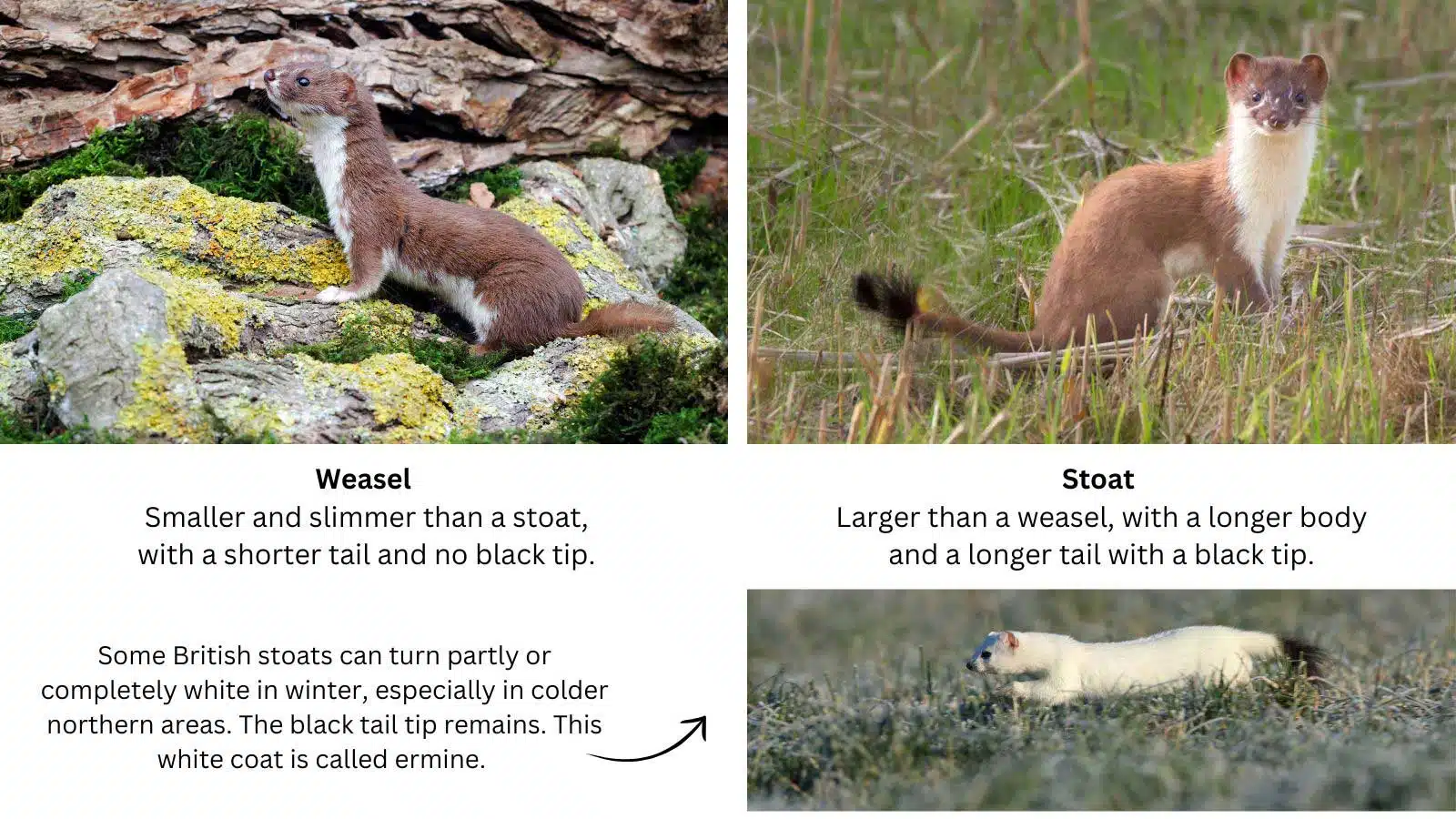
Stoats normally have brown upper fur, cream-coloured underparts and a distinctive black tip to their tail.
But in northern parts of Britain, particularly where snow is more common, some stoats turn partly or completely white during winter.
The white winter coat is known as ermine.
The black tip of the tail remains black.
The paler coat can help camouflage the animal against snow.
Reindeer change their eyes
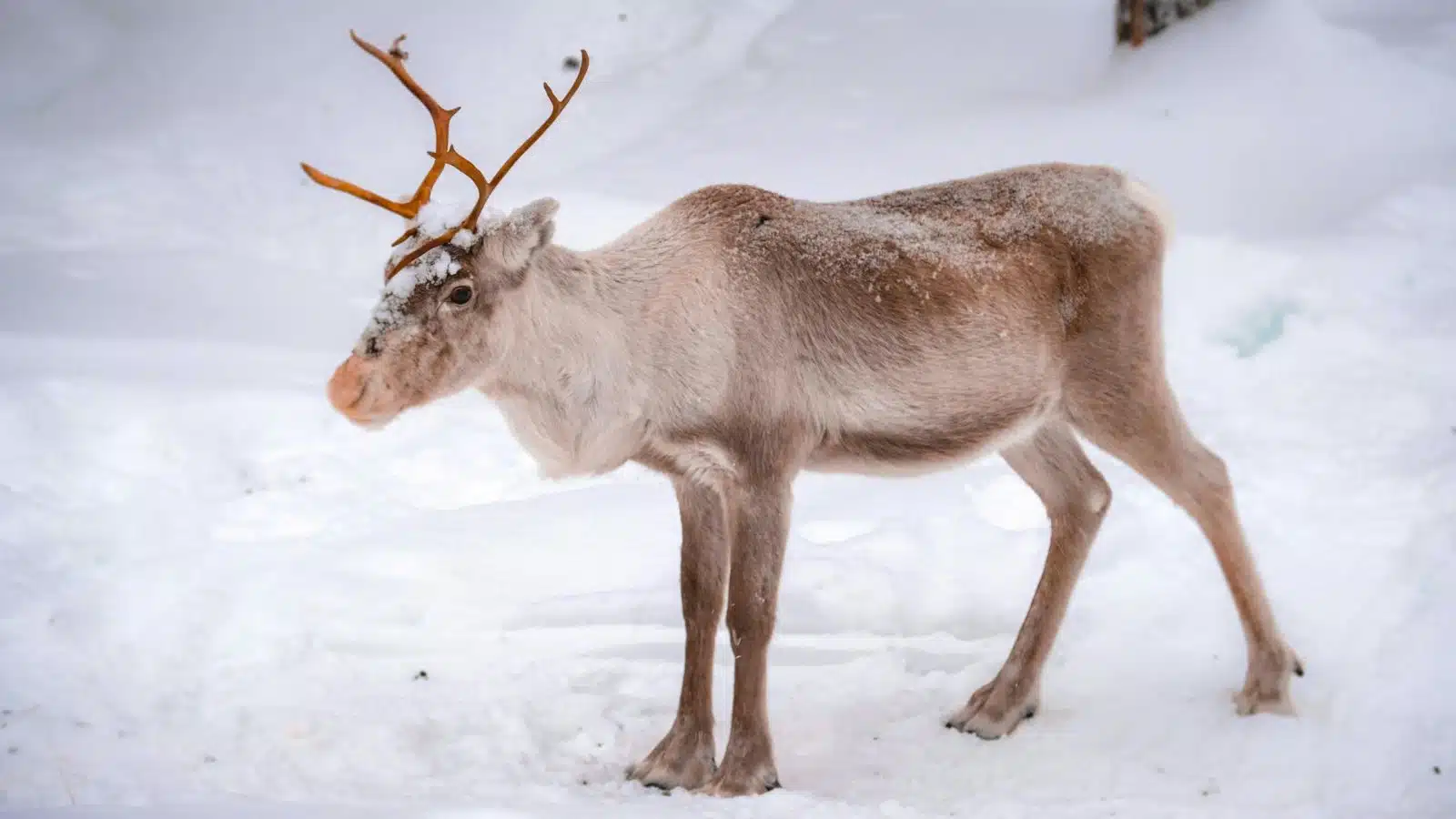
Reindeer go one step stranger.
At the back of a reindeer’s eye is a reflective layer called the tapetum lucidum.
It reflects light back through the retina and helps the eye work in dim conditions.
During summer, this reflective layer appears golden.
During winter, it changes to a deep blue.
Research indicates that the change increases the sensitivity of the reindeer’s vision during the long Arctic winter.
Later research has investigated how changes in the arrangement of collagen fibres inside the eye produce this colour change.
Rudolph’s nose gets better publicity.
His eyes are considerably stranger.
Arctic foxes swap coats
The Arctic fox is a classic example of an animal adapted to an extreme environment.
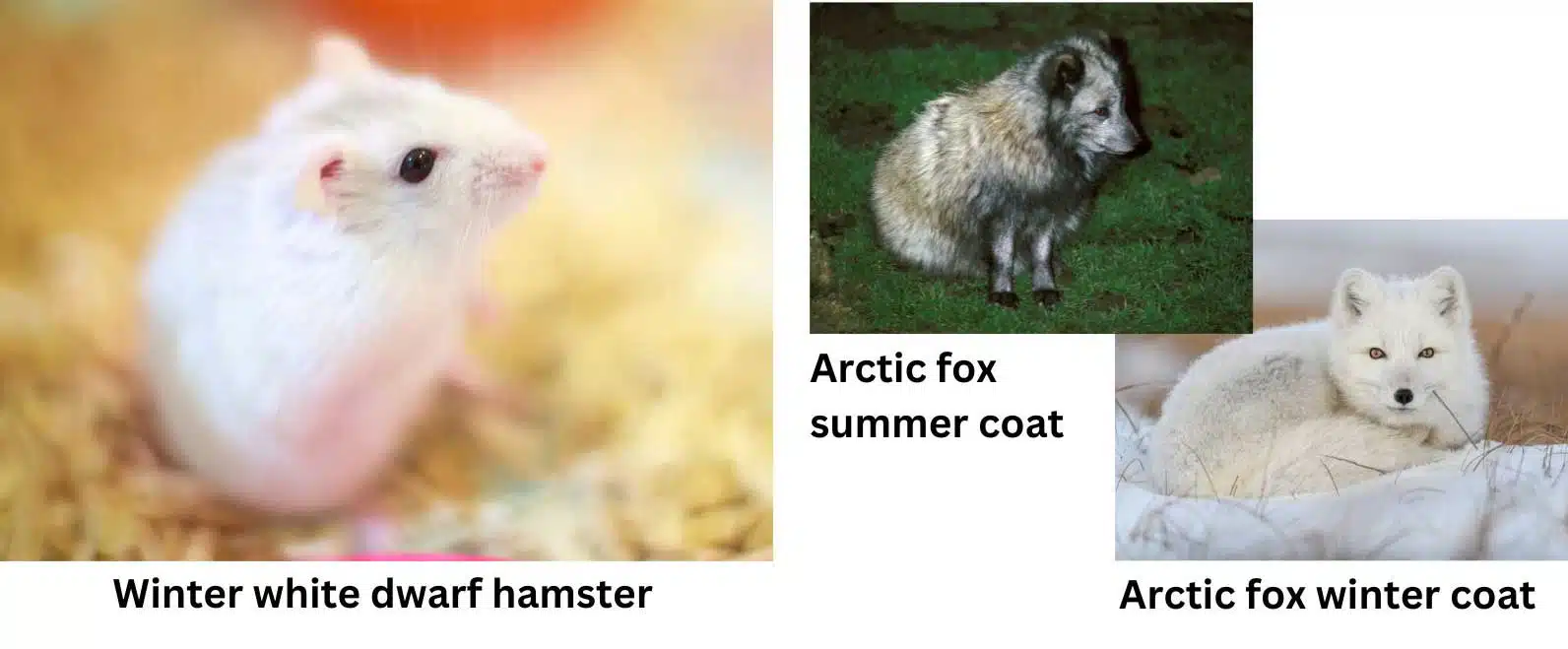
Many Arctic foxes develop thick white winter fur that helps them blend into snowy surroundings.
As the seasons change, they moult.
The summer coat can be much darker, ranging from grey to brown.
Their paws are also covered with dense fur, helping to insulate them from extremely cold ground.
Djungarian hamsters become winter hamsters
The Djungarian hamster, also called the winter white dwarf hamster, performs several transformations at once.
As days become shorter, many develop paler winter fur.
Their body mass decreases.
Their reproductive system also changes.
They can enter periods of daily torpor, during which their metabolism and body temperature temporarily fall, helping them conserve energy.
One of the cleverest parts is how the hamster knows winter is approaching.
It responds partly to photoperiod, which simply means the changing length of daylight.
Shorter days act as an advance warning.
The hamster can begin preparing for winter before the worst cold arrives.
Animal adaptations for kids: different problems, different solutions
These mammals show how many different ways animals can cope with seasonal conditions.
- A shrew can remodel its skull.
- A stoat can change the colour of its coat.
- A reindeer can alter a reflective structure inside its eyes.
- An Arctic fox can grow a thick insulating winter coat.
- A Djungarian hamster can change its fur, body mass and metabolism.
Each change helps tackle a particular problem.
- Finding enough energy
- Staying warm
- Seeing in darkness
- Avoiding predators
- Catching prey
- Camouflaging against snow
There isn’t one solution to survival.
Evolution has produced thousands of them.
What happens when the environment changes?
There is another interesting question for children to consider.
An adaptation that works brilliantly in one environment may become less useful if that environment changes.
Take a white winter coat.
Against snow, it can provide excellent camouflage.
Against dark soil with no snow, a white animal might become much easier to spot.
Scientists are studying how changing climates affect animals whose seasonal changes developed in response to particular patterns of temperature, snow and daylight.
This gives us another big biology question:
What happens when an environment changes faster than a species can respond?
For teachers: KS2 animal adaptations activity
This story works well alongside Year 6 Evolution and Inheritance, animal adaptations, habitats or extreme environments.
Ask children to choose one mammal from the article and answer:
- What changes in the animal?
- When does the change happen?
- What environmental problem might it solve?
- Does it help the animal find food, conserve energy, stay warm, see better or avoid being seen?
- Is the change happening within an individual animal?
- What inherited characteristics allow that change to happen?
- What might happen if its environment became warmer?
- Can you find another animal with a similar adaptation?
🐾 Rockford’s Nature Challenge
Invent an animal that could survive an extreme winter
Start with an ordinary mammal.
Now adapt it.
Would you give it:
- Thicker fur?
- Smaller ears to reduce heat loss?
- Huge feet for moving across snow?
- A layer of insulating fat?
- Better night vision?
- A coat that changes colour?
- The ability to reduce the size of some organs during winter?
Draw your animal and label each adaptation.
Then explain how each feature could help it survive.
There are no points for simply adding enormous teeth.
Although enormous teeth are admittedly quite fun.
Animals aren’t as fixed as they look
We often imagine an adult mammal as a finished object.
It grows up and then remains roughly the same.
Shrews show us that biology can be much stranger.
Bones can change size.
Organs can shrink and grow.
Fur can change colour and thickness.
Eyes can alter their physical properties.
Metabolism can shift into a completely different seasonal mode.
Scientists still don’t fully understand how shrews repeatedly remodel bone and other tissues.
The researchers behind the new long-clawed shrew study now want to investigate the cells and biological mechanisms controlling these changes.
For an animal small enough to disappear beneath a pile of leaves, the shrew is carrying around some very big scientific mysteries.

Discover more through our ecological adventure stories
Lost on Infinity is a musical adventure story that introduces children to extinction, biodiversity and biomimicry through storytelling and original songs.
Get the Lost on Infinity illustrated book with free musical audiobook, creating an immersive read-along experience.
Listen to the first part of the Lost on Infinity audiobook and watch the animated adventure FREE on the Apple App Store and Google Play.
Download our FREE lesson plans and slides about Extinction and Biomimicry. We also have a selection of FREE classroom activities on our website.
For even more exploration of the natural world, tune in to our Stories, Science & Secrets podcast for kids. Join Matthew, Elaine, Steve Punt and special guests as we explore biomimicry and the ways science learns from nature.
Every creature has a secret and every life is precious.
About the creators
Steve Punt is a writer and broadcaster, known for his work across BBC radio and television and co-creator of Rockford’s Rock Opera.
Matthew Sweetapple is a writer and producer of Rockford’s Rock Opera, focusing on adventure-led environmental narratives.
Elaine Sweetapple is an illustrator and co-creator of Rockford’s Rock Opera, writing about nature, biomimicry and storytelling.
Rockford’s Rock Opera adventures are written by professional writers, illustrated by artists and recorded by real musicians, actors and producers. Crafted by humans, the hard way 🎶😊💚