
Can listening to audiobooks help children learn as much as reading?
Many parents ask this question. If a child listens to a story instead of reading it, do they still learn?
New research suggests the answer may be yes.
Listening to audiobooks can help children understand stories, build vocabulary, and improve imagination. In some cases, listening and reading activate similar parts of the brain.
For families and teachers, this is encouraging news. Stories do not have to live only on printed pages. They can also live in voices, music, and sound. That idea sits at the heart of storytelling traditions around the world.
And today, science is beginning to explain why.
How does the brain process audiobooks?
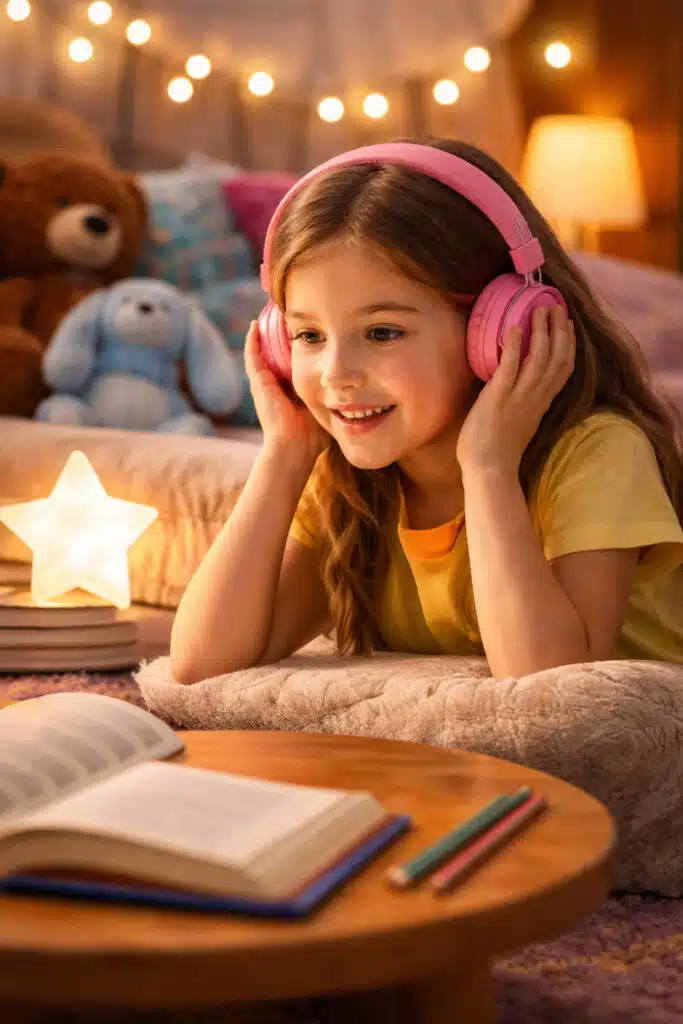 When children listen to a story, their brains do more work than many people expect.
Neuroscientists have found that listening to language activates areas linked to:
- comprehension
- imagination
- memory
- emotional understanding
These are many of the same areas used when reading.
Listening can also strengthen a child’s ability to picture scenes and characters. Without pictures on a page, the brain builds its own mental images.
For example, a child hearing about a jungle may imagine the trees, animals, and sounds.
This process strengthens creativity and narrative understanding. Listening to audiobooks elicits a more intense physiological and emotional reaction than watching films or television, according to a new University College London study.
Why are audiobooks helpful for some children?
Audiobooks can be especially useful for children who find reading difficult.
For example:
- children with dyslexia
- reluctant readers
- younger learners still mastering phonics
Listening removes the pressure of decoding every word. Instead, children focus on the story itself.
This helps them develop:
- vocabulary
- sentence rhythm
- comprehension
Because of this, many schools now use audiobooks alongside printed texts. Teachers often play a chapter while children follow along in their books. This method strengthens both listening and reading skills at the same time according to the National Literacy Trust.
Do audiobooks reduce reading ability?
Some parents worry that audiobooks may replace reading.
However, most literacy experts say the opposite often happens. Audiobooks can actually encourage children to read more.
A good story sparks curiosity. Children want to know what happens next. That excitement can lead them back to the printed book.
Audiobooks also introduce children to stories that may feel too difficult to read alone. For example, a child may listen to a longer novel first. Later, they may feel confident enough to try reading it. Stories become a bridge rather than a barrier.
Why storytelling has always mattered
Long before books existed, humans shared stories by speaking and listening. Around fires, in villages, and in families, stories travelled through voices. Children learned about the world through sound and imagination.
Audiobooks continue that tradition in a modern way. They allow stories to include:
- voices
- music
- sound effects
- emotion
These elements make stories feel alive.
For many children, this can make learning feel like an adventure rather than a lesson.
How musical storytelling can deepen learning
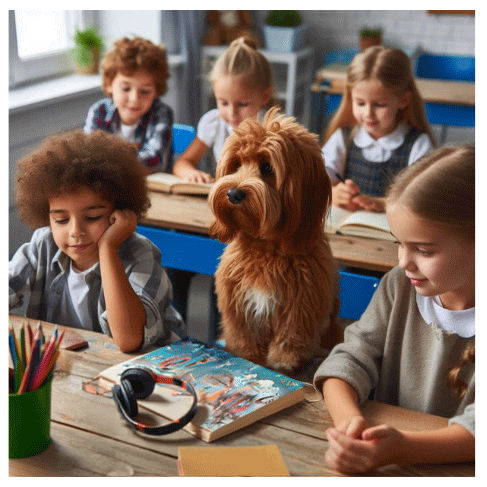 Audiobooks help children learn. Music and sound can help the brain remember information.
Scientists call this the “music and memory connection.” Rhythm and melody help the brain organise language. That is why children often remember song lyrics easily.
Musical storytelling uses this same idea. When stories include songs, sound design, and characters, children stay engaged for longer. They also build stronger emotional connections to the story. This can make learning about science, animals, and nature more memorable.
What does this mean for families and teachers?
The message from researchers is clear.
Reading and listening are not rivals. They work best together.
Children benefit from a mix of:
- reading books
- listening to stories
- discussing what they hear
- imagining the scenes
This combination builds strong literacy skills. More importantly, it helps children fall in love with stories. Because once that love begins, learning follows naturally.
Stories and nurturing a love for nature?
Stories also help children care about the natural world. When children hear stories about animals, habitats, and adventure, they form emotional connections. These connections shape how they think about nature.
In Lost on Infinity, the Island of Infinity holds the last one of every extinct species.
Each creature carries a secret shaped by evolution. If a species disappears, that secret disappears too.
Stories help children understand why biodiversity matters. And sometimes, a story heard through headphones can spark curiosity that lasts a lifetime.
Try this at home or in class
Story listening challenge
- Play an audiobook. You can hear the first two chapters of Lost on Infinity here.
- Pause the story halfway.
- Ask children to draw what they imagine the scene looks like. Then compare drawings.
Every child will picture something slightly different. That is imagination at work.
FAQs about audiobooks for children learning
Can audiobooks help children learn?
Yes. Studies show audiobooks support vocabulary, comprehension, and imagination. They activate many of the same brain areas used when reading.
Do audiobooks help children with dyslexia?
Yes. Audiobooks allow children to access stories without struggling with decoding words. This supports confidence and understanding.
Should children read and listen to stories?
Experts recommend both. Reading strengthens decoding skills. Listening strengthens comprehension and imagination.
🎶😊💚🎶😊💚🎶😊💚🎶😊💚🎶😊💚🎶😊💚🎶😊💚🎶😊💚🎶😊💚🎶😊💚🎶😊💚🎶😊💚
Discover more through story and song
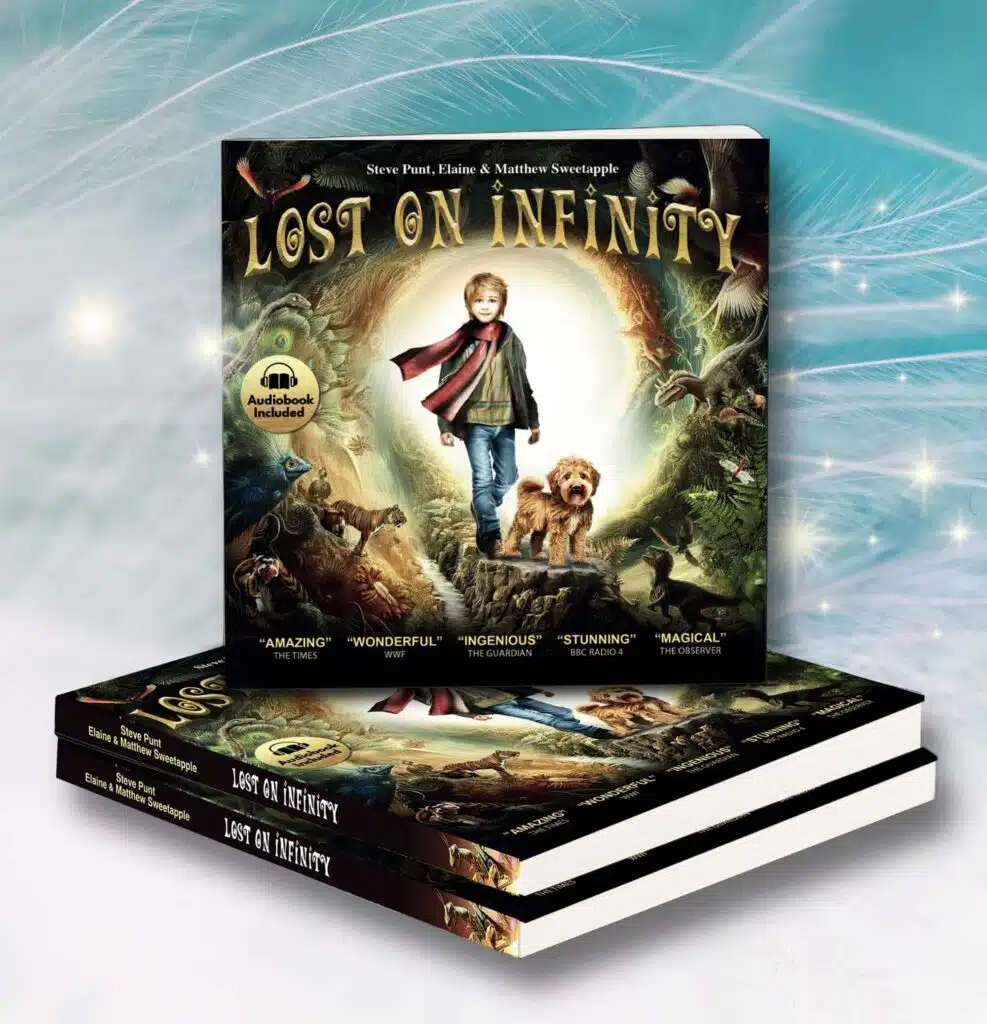 Lost on Infinity is a musical adventure story that introduces children to extinction, biodiversity and biomimicry through storytelling and original songs.
Get the Lost on Infinity illustrated book with free musical audiobook – a totally immersive experience.
Listen to the first part of the Lost on Infinity audiobook and watch the animated adventure FREE on Apple App Store and Google Play.
Download our FREE lesson plans and slides about Extinction and Biomimicry. We also have a selection of FREE classroom activities on our website.
For even more exploration of the natural world, tune in to our Stories, Science & Secrets podcast for kids. Join Matthew, Elaine, Steve Punt and special guests, as we delve into the fascinating world of biomimicry and the inspiring ways science learns from nature’s genius.
Every creature has a secret, and every life is precious.
🎶😊💚🎶😊💚🎶😊💚🎶😊💚🎶😊💚🎶😊💚🎶😊💚🎶😊💚🎶😊💚🎶😊💚🎶😊💚🎶😊💚
About the creators:
Elaine Sweetapple is an illustrator and co-creator of Rockford’s Rock Opera, writing about nature, biomimicry, and storytelling.
Matthew Sweetapple is a writer and producer of Rockford’s Rock Opera, focusing on adventure-led environmental narratives.
Steve Punt is a writer and broadcaster, known for his work across BBC radio and television, and co-creator of Rockford’s Rock Opera.