

When the sun goes down and most of us are getting ready for bed, millions of bats begin their night’s work.
They may not be as famous as lions, pandas or dolphins. But bats are among the hardest working animals on Earth. Every night they protect crops from destructive insects, pollinate plants, spread seeds and even inspire new technologies through biomimicry.
Scientists estimate that bat pest control saves US agriculture at least $3.7 billion every year. Some studies suggest the true value could be as high as $53 billion, once wider economic benefits are included. Those savings come from less crop damage and less reliance on chemical pesticides.
Nature’s pest controllers
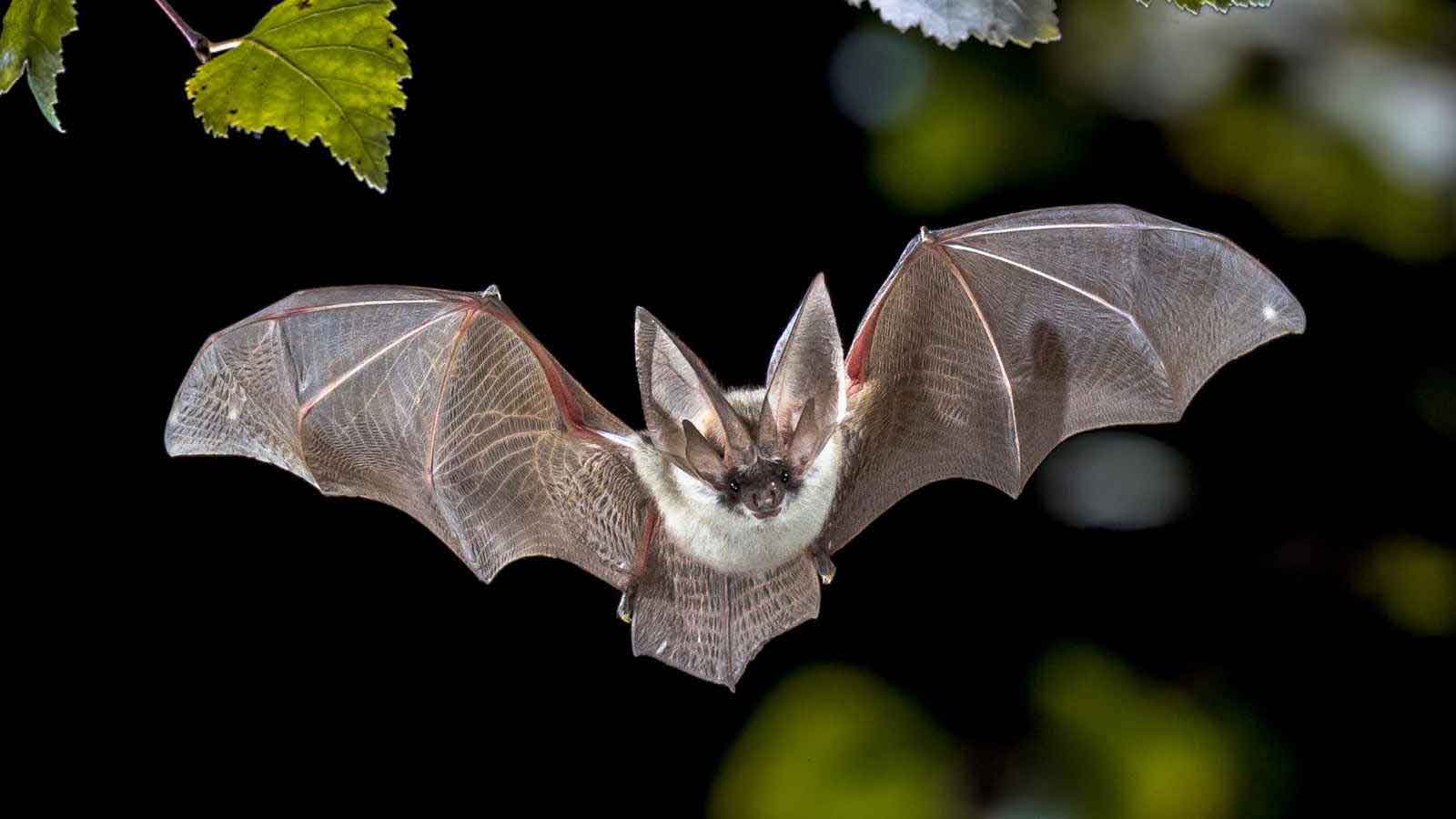
Many bat species feed almost entirely on insects. A single small bat can eat hundreds of insects in one night. Some eat more than a thousand.
Many of these insects are agricultural pests. Their caterpillars feed on crops like maize, cotton and fruit. By hunting them naturally, bats help farmers protect their harvests without spraying as much pesticide.
It’s an invisible service. It happens every night. And it has an enormous impact on food production and the environment.
More than just insect eaters
Not all bats eat insects.
In tropical regions, many species feed on nectar and fruit instead. As they move from flower to flower, they carry pollen on their fur. This helps plants reproduce. It makes bats important pollinators for many wild plants and valuable crops.
Bananas, mangoes, durian, dragon fruit and agave (the plant used to make tequila) all benefit from bats.
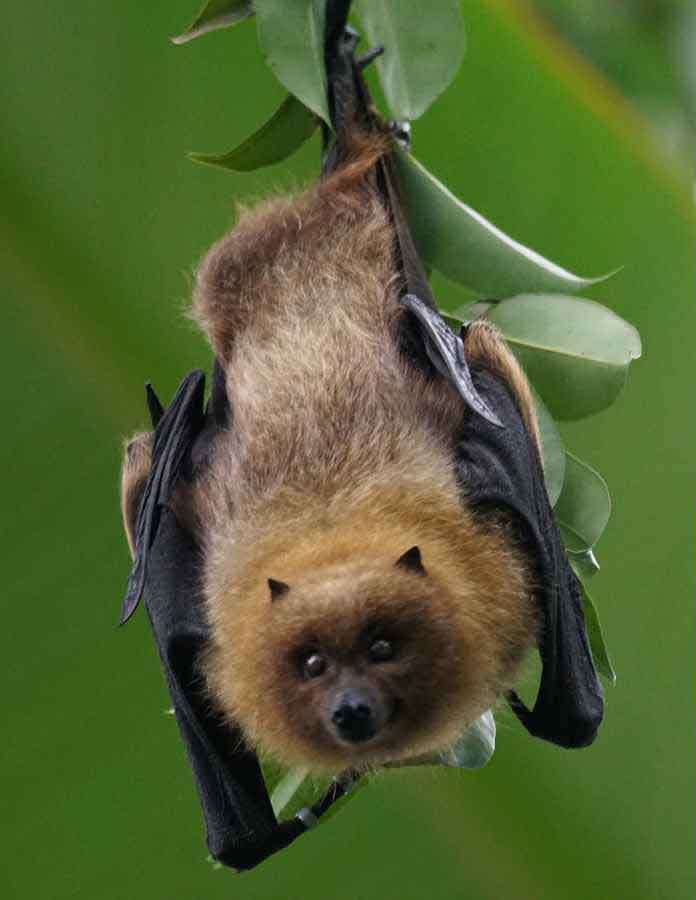
Fruit bats, often called flying foxes, do something else remarkable too. They spread seeds over huge distances as they travel across forests each night. This helps new trees grow in places damaged by storms, fire or logging.
It’s why scientists sometimes call them nature’s gardeners.
 Why are bats in danger?
 Why are bats in danger?
Despite everything they do for us, many bat populations are declining.
Their biggest challenges include:
- Loss of woodlands, hedgerows and old buildings where they roost
- Climate change, which alters the habitats they depend on
- Pesticides, which reduce the insects they feed on and can harm bats directly
- Wind turbines placed on migration routes
- White-nose syndrome, a fungal disease that has devastated bat populations across North America
When bat numbers fall, ecosystems become less balanced. Farmers often end up relying more heavily on chemical pesticides as a result.
What can bats teach us?
Bats have also inspired scientists and engineers through biomimicry — the science of learning from nature.
Their ability to navigate in complete darkness using echolocation has shaped sonar, robotics, autonomous vehicles and medical imaging. Engineers also study bat flight closely. Bats can twist, turn and change direction in an instant, using barely any energy to do it.
Nature has spent millions of years solving problems like these. Scientists simply try to understand those solutions, then adapt them for people.
A surprising link to diabetes
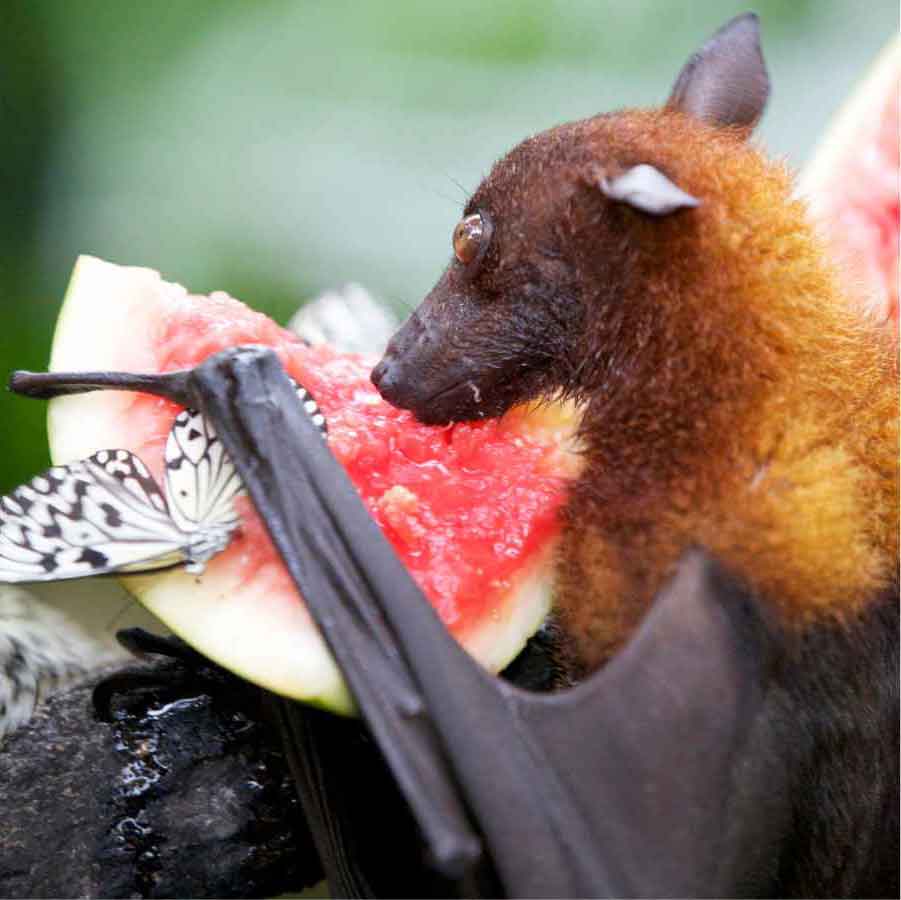 Fruit bats have another remarkable secret.
Many species eat large amounts of naturally sugary fruit every single day. Yet they rarely develop diseases that resemble human Type 2 Diabetes.
Researchers are studying how fruit bats process sugar so efficiently. They hope the answers could one day help improve treatments for diabetes and other metabolic diseases.
It’s a reminder that every species may hold clues to future medical breakthroughs. If we lose those species before we understand them, those discoveries could disappear forever.
Everything is connected
One of the most important lessons in nature is that everything is connected.
Bats eat insects. Insects feed birds and other animals. Flowers depend on pollinators. Trees provide homes for wildlife. Healthy forests capture carbon, protect rivers and produce the oxygen we breathe.
Remove one part of the system, and the effects spread much further than we might imagine.
How can we help bats?
 Fortunately, there are simple ways we can all help.
- Leave mature trees standing where it’s safe to do so
- Plant native flowers that attract insects
- Reduce unnecessary pesticide use
- Protect ponds, rivers and wetlands where insects breed
- Install bat boxes in suitable locations
- Never disturb bats or their roosts
In the UK, all 18 species of bat are legally protected. That’s because of how important they are, and because many populations have declined sharply over the last century.
A lesson from Lost on Infinity
One of the themes running through Lost on Infinity is that every living thing has a purpose, even if we don’t immediately understand it.
Bats are a perfect example.
For centuries they’ve been misunderstood, even feared. Yet they quietly protect crops, help forests recover, pollinate plants and inspire scientific discoveries that could improve people’s lives.
The next time you see a bat flickering across the evening sky, remember this. You’re watching one of nature’s greatest unsung heroes, just beginning another night’s shift.
Did you know?
🦇 There are more than 1,500 species of bat around the world. That makes them the second largest group of mammals after rodents.
🦇 Bats are the only mammals capable of true powered flight.
🦇 A single bat can eat hundreds of insects in one night.
🦇 Fruit bats help spread seeds and pollinate plants that people and wildlife depend on.
🦇 Scientists estimate bats save US agriculture between $3.7 billion and $53 billion each year through natural pest control.
🦇 Bat echolocation has inspired advances in robotics, navigation and medical technology.
Nature is full of hidden heroes. Bats are certainly among the greatest.
______________________________________________________________________

Discover more through our ecological adventure stories
Lost on Infinity is a musical adventure story that introduces children to extinction, biodiversity and biomimicry through storytelling and original songs.
Get the Lost on Infinity illustrated book with free musical audiobook – a totally immersive experience.
Listen to the first part of the Lost on Infinity audiobook and watch the animated adventure FREE on Apple App Store and Google Play.
Download our FREE lesson plans and slides about Extinction and Biomimicry. We also have a selection of FREE classroom activities on our website.
For even more exploration of the natural world, tune in to our Stories, Science & Secrets podcast for kids. Join Matthew, Elaine, Steve Punt and special guests, as we delve into the fascinating world of biomimicry and the inspiring ways science learns from nature’s genius.
Every creature has a secret, and every life is precious.
______________________________________________________________________
About the creators:
Steve Punt is a writer and broadcaster, known for his work across BBC radio and television, and co-creator of Rockford’s Rock Opera.
Matthew Sweetapple is a writer and producer of Rockford’s Rock Opera, focusing on adventure-led environmental narratives.
Elaine Sweetapple is an illustrator and co-creator of Rockford’s Rock Opera, writing about nature, biomimicry, and storytelling.
Rockford’s Rock Opera adventures are written by professional writers, illustrated by artists, and recorded by real musicians, actors and producers. Crafted by humans, the hard way 🎶😊💚