
Biomimicry, sometimes called biomimetics or bionics, means learning from nature’s solutions. It is not about copying how things look. It is about copying how they work.
Nature solves problems using less energy and creating less waste. It avoids toxic extras. That is why scientists, designers, and engineers pay close attention.
This video reveals the story of biomimicry – how Planet Earth is a cargo of amazing ideas, and brilliant solutions that have evolved over 3.5 billion years. Please share the message (full screen). It’s amazing!
A few recent examples of Biomimicry/Biomimetics in action.
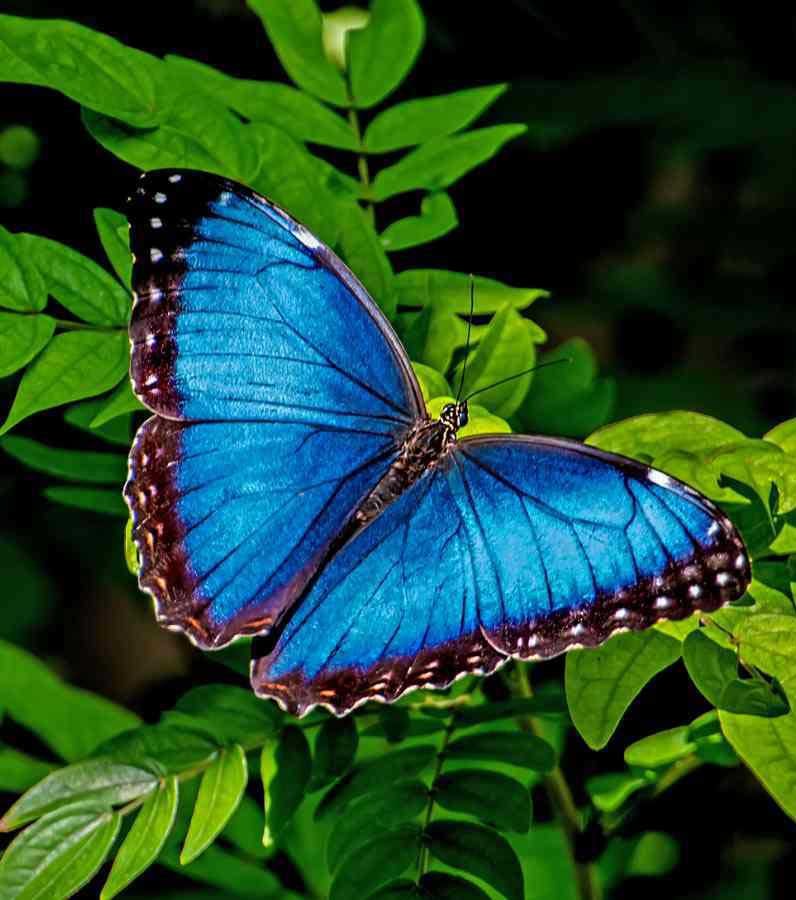
Butterfly wings and colour without pigment
Butterflies do not use paint or dye, many species use structural colour.
Their wings are covered in tiny scales. Each scale has microscopic layers. When light hits these layers, some wavelengths cancel out. Others bounce back. What we see is strong colour that does not fade.
The famous blue of the Morpho butterfly is not blue pigment. It is light being bent and reflected by nano-structures.
Researchers copy this idea to create colour that does not peel or pollute water with dye waste. Structural colour is now used in security printing. It is also explored in sustainable fashion and low-energy display research.
Nature’s trick is simple. Do not add colour. Shape the light.
 Colour-changing 3D prints inspired by chameleons
 Colour-changing 3D prints inspired by chameleons
Chameleons change colour by shifting layers of special skin cells called chromatophores. These layers expand or contract. That changes how light is reflected.
Engineers now copy this using flexible 3D-printed materials. When stretched, heated, or pressed, the internal structure shifts. The colour changes without ink.
This technology is real but still developing. Current uses include strain sensors, smart clothing research, and safety indicators.
Again, no dye. Just structure and movement.
 Packaging inspired by fruit peels
 Packaging inspired by fruit peels
Fruit peels protect soft flesh. They absorb knocks and slow water loss. Then they rot away safely.
Designers have copied this idea. GoneShells have developed compostable packaging made from natural fibres and bio-based materials, designed to protect food during transport without relying on plastic. Like a peel, the structure provides strength and flexibility while allowing airflow, helping reduce damage and spoilage. GoneShells’ packaging is designed to decompose in industrial composting conditions, returning to the soil rather than persisting as waste.
 Acacia trees and survival design
 Acacia trees and survival design
African acacia trees survive harsh sun, grazing animals, and poor soil. They manage
water carefully. Their leaf structure reduces moisture loss. Some species work with
ants for defence.
Architects and planners study acacias when designing shade systems, water-smart planting, and resilient urban spaces.
 Strength from coral reefs
 Strength from coral reefs
Coral reefs build complex forms using very little energy. They grow layer by layer in water.
Scientists study reef shapes and plant enzymes to design lightweight structures. Some experimental materials copy reef porosity to reduce weight while keeping strength.
This work is early stage. Promising, but still under testing.
 Pinecones and buildings that respond to weather
 Pinecones and buildings that respond to weather
Pinecones open and close without motors. Their scales respond to humidity. Dry air opens them and wet air closes them. This happens because fibres swell and shrink in different directions. Architects copy this for buildings that respond automatically to weather.
Vents that open when dry. Panels that close when wet. No electricity needed.
This is one of the clearest examples of passive design from nature.
 Schooling fish and traffic systems
 Schooling fish and traffic systems
Fish move in large groups without crashing. Each fish follows simple rules.
Match speed.
Keep distance.
React fast.
Traffic engineers use the same principles to model crowds and roads. The aim is fewer jams and fewer accidents.
This science is well established. It supports modern crowd simulation software and some smart traffic systems.
Why biomimicry matters
Biomimicry is not about copying appearance, it is about copying function.
Butterfly wings show colour without chemicals.
Pinecones show movement without power.
Fish show order without control.
Discover more through story and song
Get the Lost on Infinity illustrated book with free musical audiobook – a totally immersive experience.
Listen to the first part of the Lost on Infinity audiobook and watch the animated adventure FREE on Apple App Store and Google Play.
Download our FREE lesson plans and slides about Extinction and Biomimicry. We also have a selection of FREE classroom activities on our website.
For even more exploration of the natural world, tune in to our Stories, Science & Secrets podcast for kids. Join Matthew, Elaine, Steve Punt and special guests, as we delve into the fascinating world of biomimicry and the inspiring ways science learns from nature’s genius.