

Slime mould is a single-celled organism that can solve mazes, learn from experience, build efficient transport networks and adapt to its environment despite having no brain or nervous system. Scientists study slime mould because it may inspire advances in transport design, robotics, computing and biomimicry.
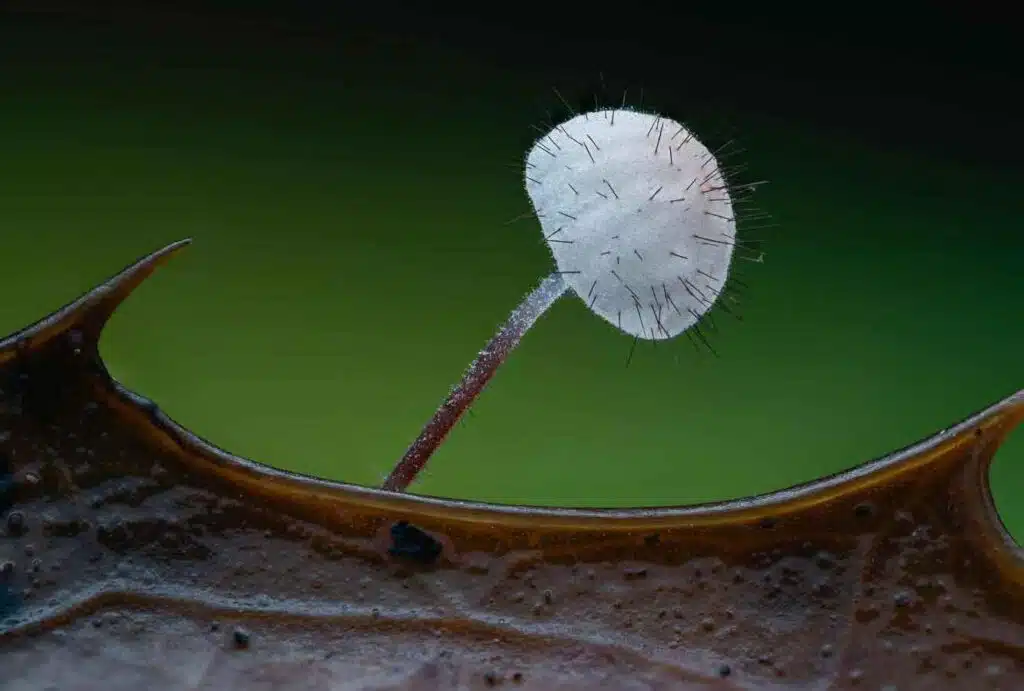
Imagine finding a creature in the woods that can solve mazes, remember things, build transport networks and make decisions, yet has no brain, no nervous system and no eyes.
It sounds like science fiction.
But it’s real – it’s slime mould.
More specifically, a remarkable species called Physarum polycephalum, often nicknamed “the blob”.
Despite looking like something left behind after an alien picnic, slime mould has become one of the most surprising organisms in modern science.
What Is Slime Mould?
For years, scientists struggled to decide what slime mould actually was.
It is not a fungus.
Not a plant.
And it is not an animal.
Instead, it belongs to a strange group of organisms called protists.
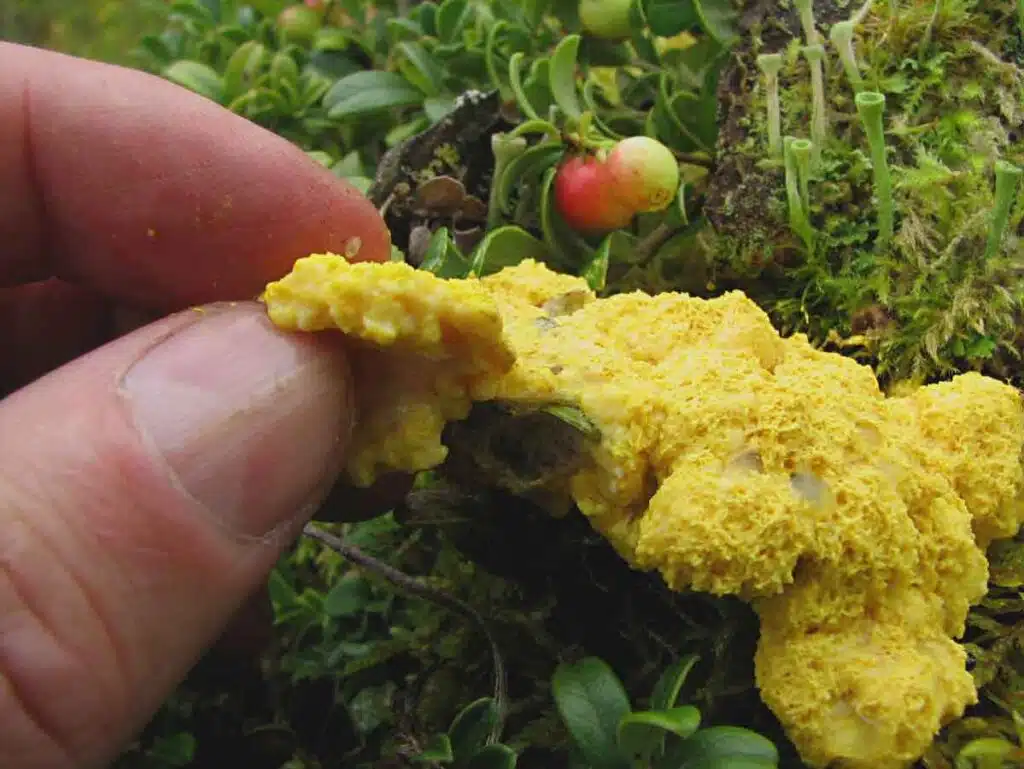
At one stage of its life, Physarum polycephalum exists as a single giant cell containing thousands, or even millions, of nuclei. Imagine one enormous living cell spreading across a forest floor like a living yellow web.
Some specimens can reach several square metres in size.
Yet technically, they are still just one cell.
That alone is enough to make your head wobble.
 How Does Slime Mould Solve Mazes?
 How Does Slime Mould Solve Mazes?
One of the experiments that made slime mould famous involved a maze.
Researchers placed food at two points and allowed the slime mould to grow through the maze. Instead of wandering aimlessly, it gradually withdrew from dead ends and strengthened the most efficient route.
The final network closely matched the shortest solution.
No brain. No map. No instructions.
Just a giant cell making what appears to be an intelligent decision.
Scientists later found that slime mould can also solve complex network problems similar to those used in transport planning and computer science.
Can Slime Mould Remember Things Without a Brain?
Perhaps the strangest discovery is that slime mould appears to have memory.
Researchers found that slime moulds can learn to tolerate unpleasant substances such as salt after repeated exposure. Even more astonishingly, they can transfer that knowledge to another slime mould when their networks fuse together.
Scientists later discovered that memories may actually be stored within the physical structure of the organism itself.
In other words, the slime mould does not keep memories inside a brain.
The body becomes the memory.
That raises fascinating questions.
Could memory exist without neurons?
And could intelligence emerge from structure rather than a central processor?
Researchers are still trying to find out.
How Can Slime Mould Think Without a Brain?
In a remarkable study from Harvard University’s Wyss Institute, scientists found that slime mould uses mechanical information from its surroundings to make decisions.
The organism can detect tiny physical differences in its environment and choose where to grow based on those signals. Researchers described the process as a form of computation carried out through its entire body.
The slime mould does not have a headquarters.
Every part of it contributes.
It is more like a living internet than a traditional animal.
Can Slime Mould Design Better Transport Networks?
One of the most astonishing slime mould studies asked a simple question:
Could a giant brainless blob design a transport system better than human engineers?
Researchers led by Raphael Kay at the University of Toronto created a computer model based on the behaviour of Physarum polycephalum. The model mimicked how real slime mould grows, adapts and reorganises its network when searching for food.
To check its accuracy, the team compared the computer simulation with real slime mould growing in laboratory dishes. The virtual slime behaved remarkably like the real thing.
The researchers then challenged their digital blob with a serious engineering problem: designing parts of Toronto’s public transport network.
The results were surprising.
Did slime mould design a better Underground?
The slime mould-inspired model created a subway system with similar travel times to the existing network, but it was around 40% less vulnerable to faults. In practical terms, if a line or station became unavailable, passengers could still move around the city with fewer delays.
There was a catch. The slime mould’s preferred design used more track, making it more expensive to build. When researchers forced the model to stay within the same budget as the existing system, the advantage largely disappeared.
Yet the experiment revealed something fascinating. The slime mould consistently prioritised resilience. It preferred networks that could survive disruption rather than simply minimising construction costs.
The researchers then turned to a very different challenge: Canada’s Wonderland, the country’s largest amusement park.
Using rides, attractions and food stands as destinations, they asked the slime mould to design a transit network around the park.
This time the blob excelled.
The slime-inspired design was nearly 10% faster for visitors and dramatically more resilient when routes were closed. At the same construction cost, the network was more than 80% less vulnerable to disruption than the existing layout.
Of course, amusement park designers have many priorities besides transport efficiency. They may deliberately guide visitors past shops, restaurants and attractions. Even so, the results were striking.
The study adds to a growing body of research showing that slime mould is remarkably good at solving transport problems. Earlier experiments famously recreated the Tokyo rail network by placing food sources at the locations of major cities around Tokyo. The slime mould grew a network that closely resembled the real rail system, despite having no map and no understanding of geography.
No engineer. No computer. No planning committee.
Just a wandering yellow cell making surprisingly sensible decisions.
Where Does Slime Mould Live?
- In woodlands, forests, and parks (often on the underside of rotting logs, dead wood, or tree bark)
- In gardens, usually on top of decaying mulch, leaf litter, or compost
- On damp lawns or fence posts following heavy rain
What Does the Latest Slime Mould Research Show?
Scientists continue to discover new abilities.
Recent studies have shown that slime mould can reorganise its internal flow patterns before making decisions, effectively “thinking ahead” before committing to a route.
Researchers are also exploring how slime mould behaviour could inspire new forms of soft robotics, adaptive materials and self-healing infrastructure.
Some scientists believe future transport systems, communication networks and even artificial intelligence systems could borrow principles from slime mould.
Every year, the blob becomes a little less blob-like and a little more mysterious.
What can biomimicry learn from slime mould?
Biomimicry is the science of learning from nature’s solutions.
Slime mould offers some extraordinary lessons.
Smarter Transport Systems
Its ability to create efficient networks has inspired algorithms for railways, road systems and supply chains. Engineers are studying slime mould strategies to improve traffic flow while reducing costs and increasing resilience.
Self-Organising Computers
Researchers have explored slime mould-inspired computing systems that can solve optimisation problems without traditional programming approaches.
Swarm Robotics
Future robot teams may use slime mould principles to coordinate actions without a central controller. Each robot would follow simple local rules, yet together create intelligent behaviour.
Resilient Cities
Urban designers are studying slime mould growth patterns to understand how cities might become more adaptable and efficient over time.
In nature, there is no chief executive slime mould.
No project manager.
No board meeting.
Yet somehow the system works.
Why Slime Mould Is Changing Our Understanding of Intelligence
For centuries, humans linked intelligence to brains.
Slime mould challenges that assumption.
- It remembers.
- It learns.
- It solves problems.
- It adapts.
- It optimises networks.
And it does all of this as a giant wandering cell.
Perhaps intelligence is not always about having a brain.
Maybe it is about processing information, responding to change and finding solutions.
If that is true, then deep in damp forests around the world, a bright yellow blob may be quietly rewriting what we think intelligence really is.
The next time you see something strange spreading across a fallen log, don’t be too quick to dismiss it.
You might be looking at one of the cleverest creatures on Earth.
Frequently Asked Questions About Slime Mould
Is slime mould a fungus?
No. Slime mould belongs to a group of organisms called protists. Although it resembles a fungus in some stages of its life cycle, it is more closely related to amoeba-like organisms.
Does slime mould have a brain?
No. Slime mould has no brain, nervous system or central control centre. Despite this, it can solve problems, learn from experience and adapt its behaviour.
Is slime mould intelligent?
Scientists debate exactly how intelligence should be defined, but slime mould demonstrates behaviours such as learning, memory and optimisation that appear remarkably intelligent.
Can slime mould be used in biomimicry?
Yes. Researchers have used slime mould-inspired designs to improve transport networks, logistics systems, robotics and computer algorithms.
Could slime mould belong on Infinity?
If slime mould ever arrived on the Island of Infinity, the creatures working in the Fossil Record Office would probably give it a department of its own.
After all, it can solve problems without a brain, redesign transport systems without maps and remember things without a memory centre.
The ten-legged Dectopus engineers would be baffled.
Colonel Utensil would probably insist on putting it in charge of traffic flow around the Fossil Record Office.
And the strangest thing?
It might actually do a better job than everyone else.
For a creature that looks like a blob of custard crawling across a log, that is a remarkable achievement.
____________________________________________________________________
 Discover more through our stories

Lost on Infinity is a musical adventure story that introduces children to extinction, biodiversity and biomimicry through storytelling and original songs.
Get the Lost on Infinity illustrated book with free musical audiobook – a totally immersive experience.
Listen to the first part of the Lost on Infinity audiobook and watch the animated adventure FREE on Apple App Store and Google Play.
Download our FREE lesson plans and slides about Extinction and Biomimicry. We also have a selection of FREE classroom activities on our website.
For even more exploration of the natural world, tune in to our Stories, Science & Secrets podcast for kids. Join Matthew, Elaine, Steve Punt and special guests, as we delve into the fascinating world of biomimicry and the inspiring ways science learns from nature’s genius.
Every creature has a secret, and every life is precious.
___________________________________________________________________________
About the creators:
Steve Punt is a writer and broadcaster, known for his work across BBC radio and television, and co-creator of Rockford’s Rock Opera.
Matthew Sweetapple is a writer and producer of Rockford’s Rock Opera, focusing on adventure-led environmental narratives.
Elaine Sweetapple is an illustrator and co-creator of Rockford’s Rock Opera, writing about nature, biomimicry, and storytelling.
Rockford’s Rock Opera adventures are written by professional writers, illustrated by artists, and recorded by real musicians, actors and producers. Crafted by humans, the hard way 🎶😊💚