

The Tasmanian Wolf (Thylacine)
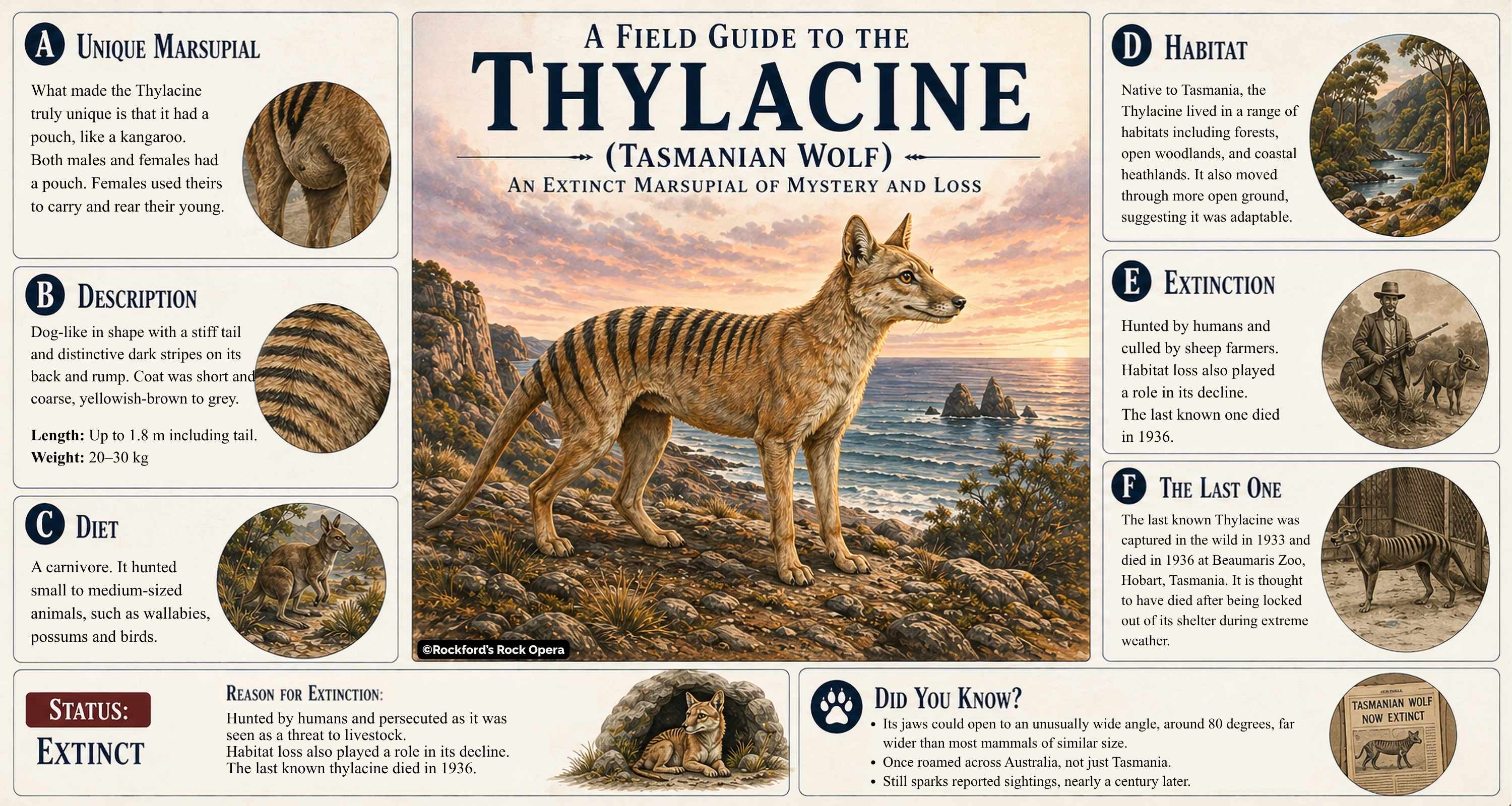
The Thylacine was a large carnivorous marsupial that once lived in Australia and later only in Tasmania. It had a dog-like body, a stiff tail, and dark stripes across its back, but it was not related to dogs. Like kangaroos, it carried its young in a pouch.
It is best known by the name thylacine, but it also goes by several other names. These include Tasmanian tiger, Tasmanian wolf, zebra dog, pouched wolf, and marsupial dog.
Its scientific name, Thylacinus cynocephalus, means “dog-headed pouched one”, reflecting its unusual mix of features.
Story Role
Rolf the Thylacine appears in Lost on Infinity, set on the Island of Infinity, where the last of every extinct species gathers as time spirals into the past. He lives among the rocks at the entrance, watching each new arrival with quiet caution after humans hunted his kind to extinction.
He does not trust humans, but when Rockford the dog arrives frightened and confused, Rolf softens. Staying close, he gently tries to cheer him up, even managing a dry joke: “At least you’ll be famous! Most of us no-one’s ever heard of!”
Did You Know?
They Were "Pouches-for-All" Marsupials: While female thylacines had a backward-facing pouch to protect their young from brush while running, male thylacines also possessed a partial, external pouch, a unique feature among marsupials.
They Could Open Their Jaws Nearly 120 Degrees: When threatened or agitated, the thylacine would open its mouth in an incredibly wide, frightening "yawn". Despite having relatively weak jaws for its size, this massive gape was a signature threat display.
They Hop-Walked Like Kangaroos: Although they looked like dogs, thylacines were not closely related to canines. When startled or moving at high speeds, they were known to briefly hop on their hind legs, similar to a kangaroo.