
It’s the first day of (meteorological) Spring and a good time to say hello to the creatures that quietly keep the world ticking over. One of the most important is almost invisible.
Meet the springtail.
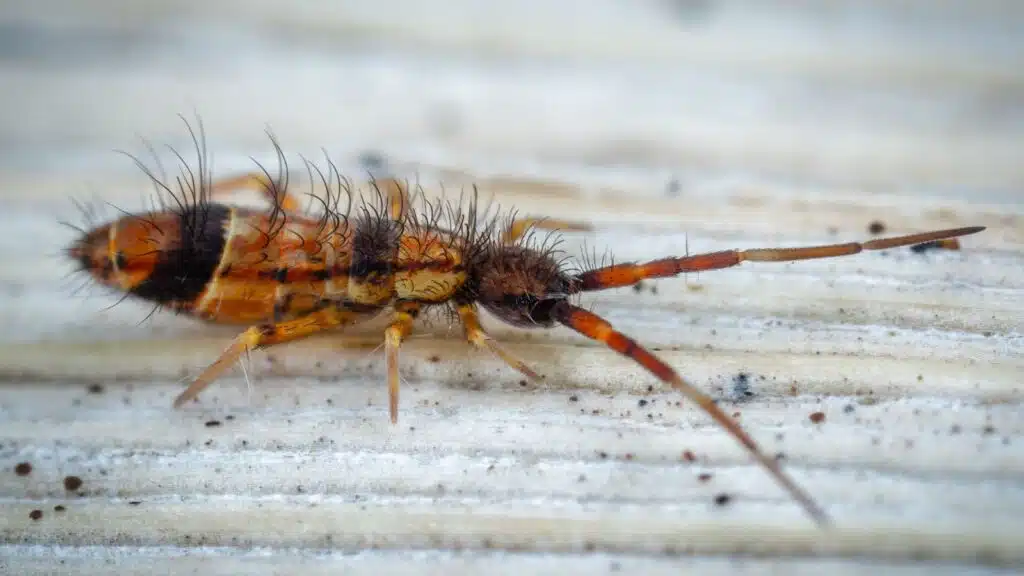
Springtails are tiny soil-dwelling animals. Most are less than 2 mm long. They live under our feet, in leaf litter, compost, moss, beach sand, tree bark, caves, snowfields, and even Antarctic soils. If there is moisture and organic matter, springtails will be there.
They are not insects. They belong to a group called Collembola. Fossils show their ancestors appeared over 400 million years ago, making them older than dinosaurs and trees with leaves.
What makes a springtail special?
The clue is in the name. Most springtails have a forked tail called a furcula. It is tucked under the body. When released, it flicks against the ground and launches the animal into the air.
The jump can be many times their body length. It is fast. It is chaotic. It works.
This escape trick is one reason they have survived almost everywhere on Earth.
Where do springtails live?
Almost everywhere.
They are found in rainforests and deserts. On mountain tops. In urban gardens. In polar regions where few animals survive. Some species even live on the surface of water, skating across puddles using surface tension.
Scientists estimate there may be tens of thousands of species worldwide. Many are still unnamed.
That is quite something for an animal most people have never noticed.
Why do springta ils matter?
 ils matter?
Springtails are recyclers.
They feed on decaying plant matter, fungi, algae, and bacteria. As they graze, they help break organic material into smaller pieces. This speeds up decomposition and nutrient cycling.
Healthy soil depends on this process. Plants depend on healthy soil. So do forests, crops, and gardens.
Springtails also help control fungal growth. Some fungi are harmful to plants. Springtails keep those populations in check simply by eating them.
In short, no springtails, poorer soil.
Can springtails survive extreme conditions?
Yes. Impressively so.
Some species produce antifreeze-like chemicals that stop ice crystals forming inside their cells. This allows them to survive freezing temperatures. Others can enter a dormant state during drought, waiting patiently for moisture to return.
They are small, but they are tough.
Are springtails a sign of a healthy garden?
Usually, yes.
If you see springtails in compost, pots, or soil, it often means there is moisture and organic matter. That is good news. They do not harm plants. They are part of the clean-up crew.
Gardeners sometimes mistake them for pests. They are not. They are helpers.
How do scientists study something so small?
With patience. And microscopes.
Springtails are used in soil health research and environmental monitoring. Because they respond quickly to pollution and habitat change, their presence or absence can reveal how healthy an ecosystem really is.
They are tiny indicators with big stories to tell.
Search for a Springtail
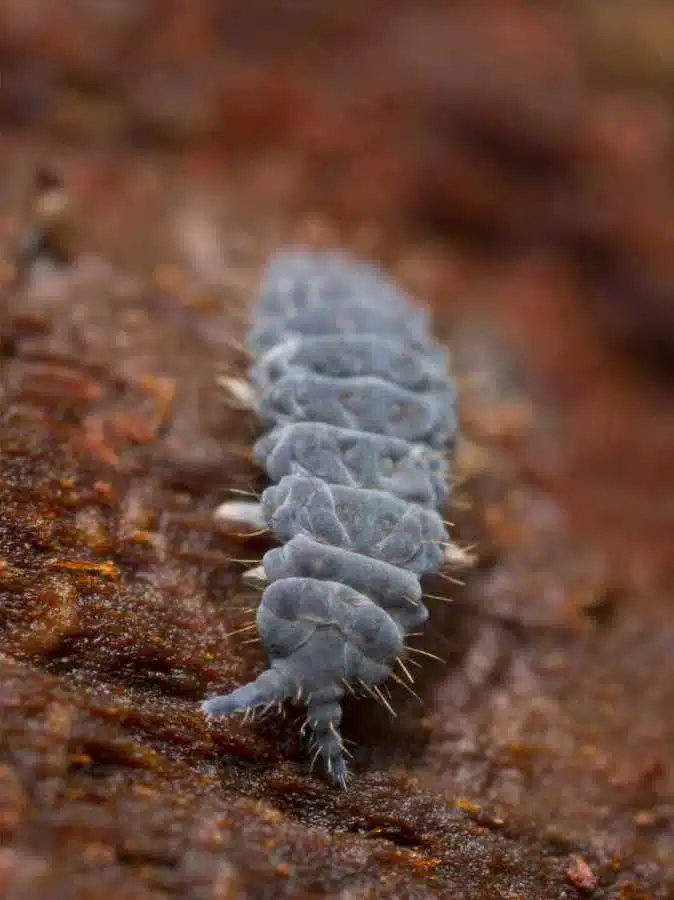 If you want to find some look in damp areas such as:
Houseplants: Soil, saucers, and the outside of pots.
Damp Areas: Bathrooms, basements, and kitchens, especially around leaking pipes.
Outdoors: Under decaying leaves, wood, mulch, or near moist soil and mud puddles.
How to recognise them
• Extremely small, often speck-like
• Grey, white, black, or sometimes yellow/purple
• Jump suddenly using a forked tail (furcula)
• Often seen in clusters
At Rockford’s Rock Opera, we love creatures that do vital work without applause. Springtails are exactly that.
They would fit right in on the Island of Infinity, quietly maintaining the ground beneath the grand towers of the Fossil Record Office. No drama. No fanfare. Just endless, essential work that keeps everything else alive.
Springtails show children something important. Not all heroes are large, some are smaller than a grain of rice.
Discover more through story and song
 Get the Lost on Infinity illustrated book with free musical audiobook – a totally immersive experience.
Listen to the first part of the Lost on Infinity audiobook and watch the animated adventure FREE on Apple App Store and Google Play.
Download our FREE lesson plans and slides about Extinction and Biomimicry. We also have a selection of FREE classroom activities on our website.
For even more exploration of the natural world, tune in to our Stories, Science & Secrets podcast for kids. Join Matthew, Elaine, Steve Punt and special guests, as we delve into the fascinating world of biomimicry and the inspiring ways science learns from nature’s genius.