
Artificial intelligence is changing how we create stories. So it is natural to ask: how AI will affect audiobooks in the years ahead.
AI can now generate voices. It can mimic accents. It can even compose simple background music. Because of this, publishers can produce audiobooks faster and at lower cost.
However, storytelling is more than sound.
Families and teachers want to know whether AI narration can truly replace human performance. That question matters, especially for children aged 5 to 10. Listening builds imagination, empathy, and language skills. So let us explore what is happening and what it means for education.
What Are AI Audiobooks?
AI audiobooks use synthetic voices created by machine learning systems.
These systems analyse thousands of hours of recorded speech. Then they learn patterns of tone, rhythm and pronunciation. After that, they generate new spoken audio from written text.
For example, text-to-speech technology has improved greatly over the past decade. Research from organisations such as the University of Edinburgh and Google DeepMind shows how neural networks can model natural speech patterns.
Because of this, AI narration now sounds more human than early robotic voices.
Will AI Replace Human Narrators?
Probably not completely.
A skilled narrator brings emotion, timing and subtle variation. They respond to humour. They shape suspense. They create distinct character voices.
AI can imitate tone. Yet it does not understand meaning in the human sense. It predicts the next sound based on data patterns.
For young listeners, emotional connection matters. Children respond to warmth and surprise in a real performance.
That human element supports comprehension. Studies into expressive reading show that vocal variation improves understanding and recall. This supports literacy development in primary classrooms.
So while AI narration may grow, human storytelling still carries depth.
How Could AI Help Audiobook Production?
AI may support creators rather than replace them.
For example:
• Draft narration for early production stages
• Translate stories into multiple languages
• Assist accessibility for visually impaired learners
• Create personalised pacing for different reading levels
Because of this, more stories may reach more children.
Schools with limited budgets may access wider content libraries. Smaller publishers may produce audio versions of books more easily.
This could increase diversity in children’s storytelling.
Are There Risks With AI Audiobooks?
Yes. Several concerns exist.
Firstly, voice ownership raises legal and ethical questions. If an AI copies a performer’s voice, who controls that identity?
Secondly, creative homogenisation may occur. If many stories use similar AI voices, variety could shrink.
Thirdly, over-reliance on automation might reduce opportunities for human performers, musicians and sound designers.
Creativity thrives on individuality. Biodiversity in nature supports resilience. In the same way, creative diversity strengthens culture.
When a species disappears, we lose evolutionary knowledge. Likewise, when creative skills disappear, we lose artistic knowledge.
Every creature has a secret shaped by evolution. Every storyteller carries a creative secret shaped by experience.
How Does AI Affect Children’s Learning?
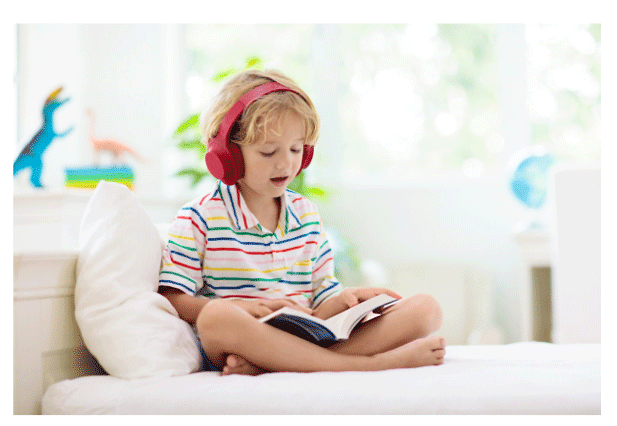 Audiobooks already support literacy.
Research shows that listening to stories improves vocabulary and comprehension. It also supports children with dyslexia or attention difficulties.
AI narration may increase access. However, engagement matters.
Children respond strongly to music, character voices and sound design. Musical storytelling stimulates multiple brain regions. Rhythm supports memory. Repetition builds prediction skills.
In our musical audiobook Lost on Infinity, narration flows seamlessly into songs and rich sound design. That layered format strengthens listening stamina and sparks imagination. We created and recorded the story before AI tools became widespread. Could the years we spent writing, composing and refining it have been compressed into a few weeks? Perhaps. But would it carry the same unexpected turns, emotional depth and human heart?
AI can generate sound. Yet musical storytelling requires creative intention.
Can AI Create Musical Audiobooks?
AI can compose simple melodies. It can generate backing tracks. Some tools can even produce sung vocals.
However, meaningful songwriting reflects lived experience. Lyrics connect to emotion and narrative arcs.
In educational settings, music supports recall. Children often remember ecological facts through song more easily than speech alone.
Because of this, musical audiobooks offer unique classroom value.
Stories such as Lost on Infinity combine ecology, humour and music. The Island of Infinity holds the last one of every extinct species. That idea helps children grasp extinction in a hopeful framework. It opens discussions about difficult topics.
AI may assist production. Yet human creativity shapes the message.
Is AI Good or Bad for the Future of Audiobooks?
It depends how we use it.
Technology itself is neutral. Its impact depends on human intention.
Used wisely, AI could:
• Expand access
• Reduce production barriers
• Support translation and accessibility
• Personalise pacing
Used carelessly, it could:
• Reduce artistic diversity
• Blur ethical boundaries
• Prioritise speed over depth
The future of audiobooks will likely blend human creativity with intelligent tools. It gives independent authors a chance to do more with their stories, within an affordable budget.
What Should Parents and Teachers Look For?
When choosing audiobooks, consider:
• Expressive narration
• Clear educational value
• Rich sound design
• Age-appropriate pacing
• Themes that support empathy and curiosity
Ask whether the story encourages imagination. Does it build understanding of the natural world? Does it spark questions?
With this in mind, AI becomes one tool among many.
Try This at Home or in Class
Play two short story clips. One expressive. One flat in tone.
Ask children:
• Which felt more exciting?
• Which helped you imagine the scene?
• Why?
This simple activity builds listening awareness.
You can pair this with our FREE lesson plans on AI, extinction and biomimicry, available on our website.
FAQs
How will AI affect audiobooks in schools?
AI may increase access and reduce costs. However, expressive human narration still supports stronger engagement and comprehension.
Are AI audiobooks safe for children?
They are safe if content is age-appropriate. Quality control remains important, especially in automated production.
Can AI create emotional storytelling?
AI can imitate emotional tone. It does not experience emotion. Skilled human narrators still create deeper connection.
Will AI replace musical audiobooks?
Unlikely. Music and storytelling rely on creative intention and lived experience. AI may assist production but not replace artistry.
🎶😊💚🎶😊💚🎶😊💚🎶😊💚🎶😊💚🎶😊💚🎶😊💚🎶😊💚🎶😊💚🎶😊💚🎶😊💚🎶😊💚
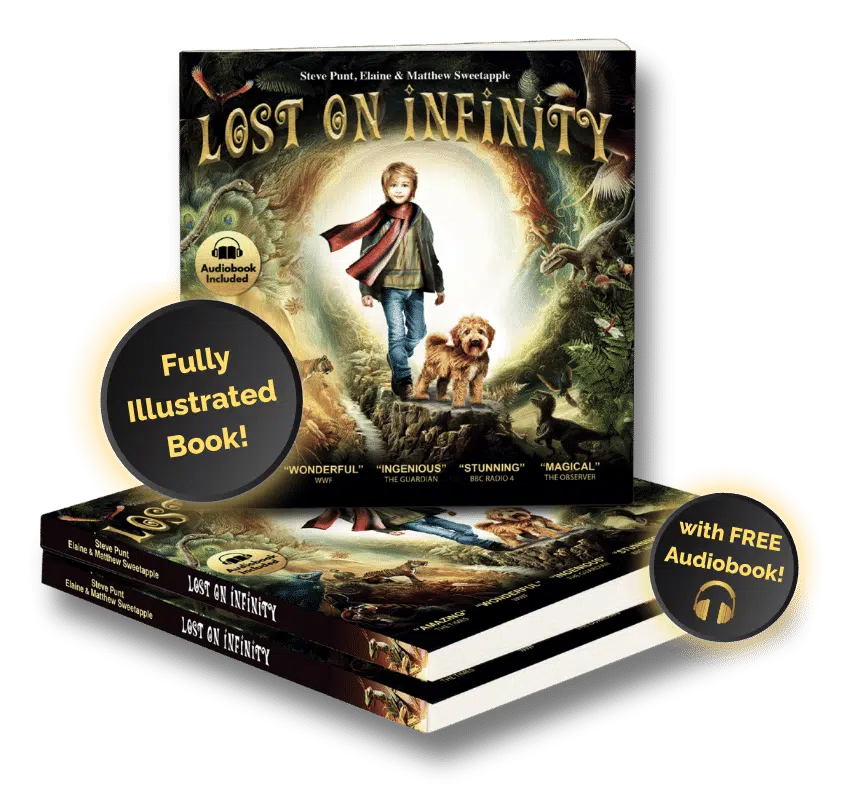 Get the Lost on Infinity illustrated book with free musical audiobook – a totally immersive experience.
Listen to the first part of the Lost on Infinity audiobook and watch the animated adventure FREE on Apple App Store and Google Play.
Download our FREE lesson plans and slides about Extinction and Biomimicry. We also have a selection of FREE classroom activities on our website.
For even more exploration of the natural world, tune in to our Stories, Science & Secrets podcast for kids. Join Matthew, Elaine, Steve Punt and special guests, as we delve into the fascinating world of biomimicry and the inspiring ways science learns from nature’s genius.
Every creature has a secret, and every life is precious.
🎶😊💚🎶😊💚🎶😊💚🎶😊💚🎶😊💚🎶😊💚🎶😊💚🎶😊💚🎶😊💚🎶😊💚🎶😊💚🎶😊💚
About the creators:
Elaine Sweetapple is an illustrator and co-creator of Rockford’s Rock Opera, writing about nature, biomimicry, and storytelling.
Matthew Sweetapple is a writer and producer of Rockford’s Rock Opera, focusing on adventure-led environmental narratives.
Steve Punt is a writer and broadcaster, known for his work across BBC radio and television, and co-creator of Rockford’s Rock Opera.