

More people want to know how to create an immersive audiobook. Some are adapting existing books, while others are producing original stories. We are often asked how we made Rockford’s Rock Opera, our dramatised musical adventure. What equipment did we use? Which mistakes should creators avoid? What would we do differently today? Here’s what we have learned from more than 20 years of making immersive audio. First, we will explain how we recorded Lost on Infinity. We will then look at our music and homemade sound effects. Finally, we will share practical advice for creating an immersive audiobook at home.
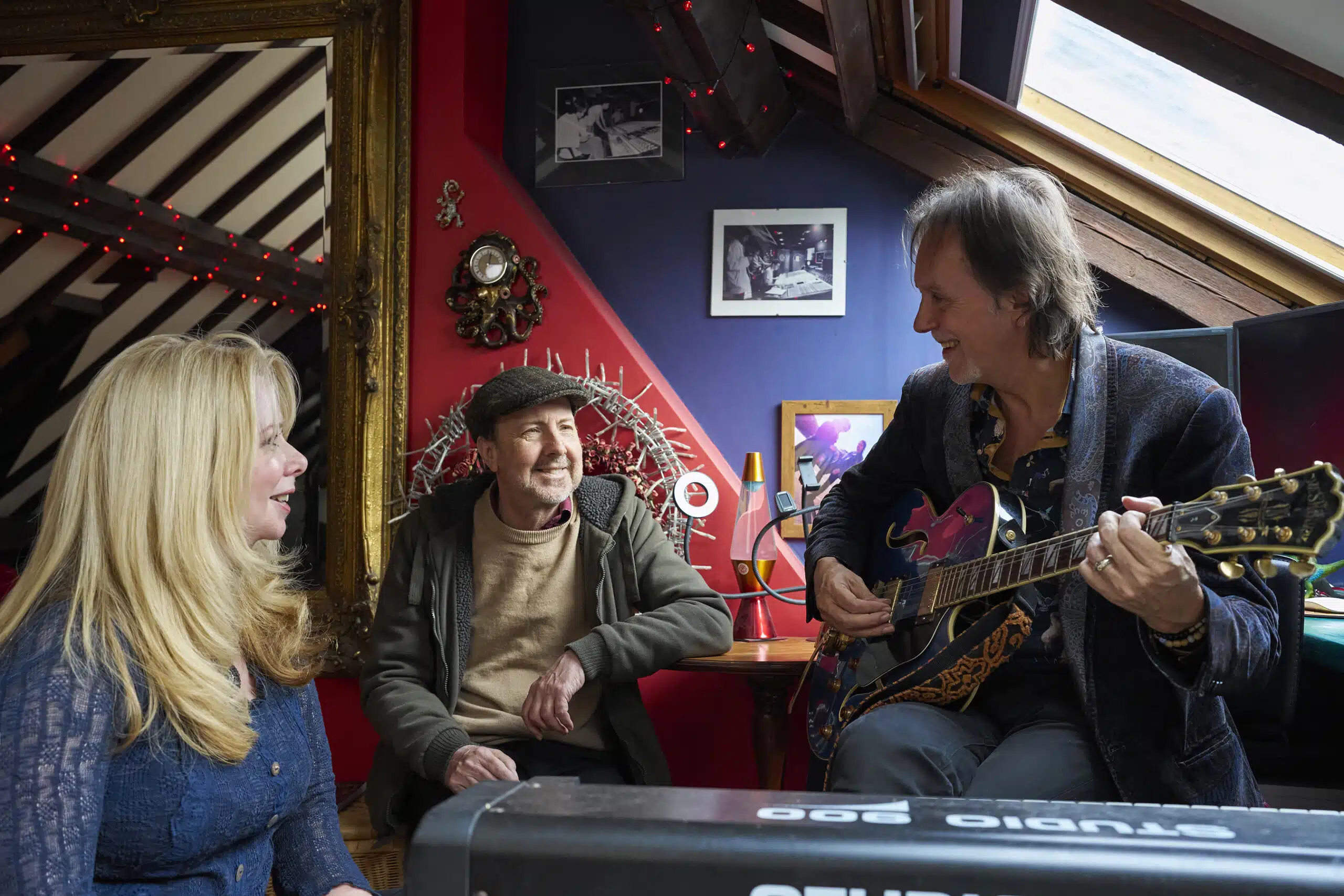
Steve Punt, Elaine and Matthew, still in the studio more than 20 years on!
What Is an Immersive Audiobook?
An immersive audiobook uses more than narration alone. For example, it may include character voices, original music and sound effects. Background sounds can also bring each scene to life. Together, these elements help listeners step inside the story. That is the key difference when you create an immersive audiobook rather than a standard narration.
However, adding more sound does not automatically make an audiobook better. Every effect and musical moment needs a purpose. Otherwise, the production can become distracting or difficult to follow.
Why Create a High-Quality Immersive Audiobook?
When an audiobook includes music and drama, sound quality matters. Listeners soon notice unclear speech. They also notice sudden changes in volume or unwanted background noise.
A professional and enjoyable production should include:
- Engaging and characterful narration.
- A quiet and controlled recording environment.
- Clean audio with minimal hum, mouth noise or plosives.
- Consistent voices, pacing and sound levels.
- Smooth transitions between dialogue, music and effects.
Together, these elements form the basis of a good listening experience. Poor sound can pull someone out of the story. As a result, even brilliant writing can lose its impact. Anyone learning how to create an immersive audiobook should treat clear sound as a priority.
Why Immersive Audiobooks Are Growing
Audiobooks are now an important way for families to enjoy stories. For example, people listen during car journeys, at bedtime or in class. Children can also follow the words in a printed book.
In addition, an audiobook can become a shared experience. Unlike separate screens, it can bring a whole family into the same story.
Immersive audiobooks at a glance
- Narration, acting, music and sound effects work together.
- Stories can feel vivid and immediate.
- Reluctant and struggling readers may find them helpful.
- Families and schools can listen together.
- Children can enjoy stories above their current reading level.
Why Immersive Audiobooks Help Reluctant Readers
For children who find reading difficult, a good immersive audiobook can open the door to stories. They can enjoy the characters and ideas without stopping at every unfamiliar word.
Audiobooks may also help children:
- Develop vocabulary and comprehension
- Hear fluent and expressive reading
- Access books above their current reading level
- Follow a printed text while listening
- Build confidence and enjoyment
As a result, audio can provide a bridge into reading. It does not need to replace books. In particular, it may help neurodiverse children and those who find reading stressful.
How We Created an Immersive Audiobook in an Attic
We began recording Lost on Infinity in the early 2000s. In effect, we were learning how to create an immersive audiobook as we went along. At that time, online tutorials were rare. Digital tools and affordable sound libraries were also limited. Fortunately, imagination was free.
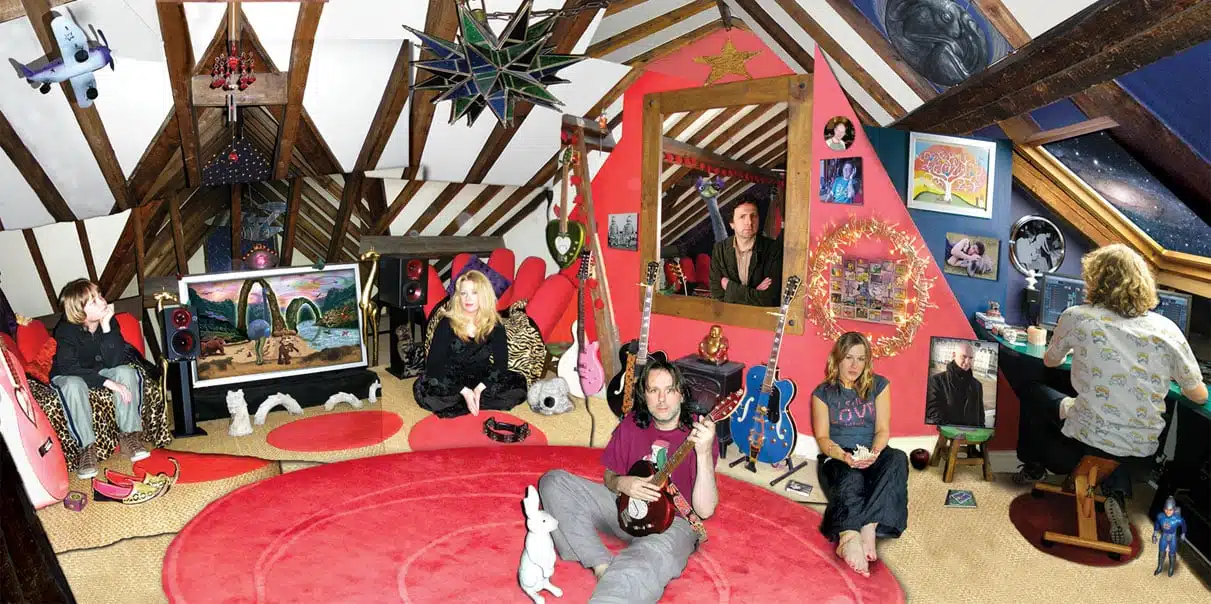
The attic studio where Rockford’s Rock Opera began.
Our original studio setup
- Apple Logic Pro
- Neumann TLM-103 microphone
- Lots of guitars and things to bang
- A DIY attic recording space
- Homemade sound effects
- Vintage BBC Sound Effects records
- Tea, patience and lots and lots of time!
Creating Homemade Sound Effects
Many sound effects were recorded at home. For example, we opened and banged doors. Foil and fabric created movement. Meanwhile, different surfaces gave us a range of footsteps.
For one effect, we shook dried beans inside boxes to create the sound of scurrying insects. It was cheap, simple and surprisingly effective.
In addition, we used vintage BBC Sound Effects records from the 1970s. They added atmosphere and texture to the production.
Today, creators have many more options. For instance, professional effects can be licensed from libraries such as Pond5. AI sound tools are also appearing. However, we have not tested those ourselves.
Whatever source you choose, check that you have permission to use it. After all, paying for creative work is better legally and karmically.
Writing the Songs
Music was part of Rockford’s Rock Opera from the start. It was never added as decoration later. Instead, the songs, characters and plot grew together.

Many of the songs began in the garden before reaching the recording studio.
Sometimes a full song appeared at a key point. At other times, we introduced a short musical phrase earlier. As a result, the listener was ready when the full song arrived.
Recording One Chapter at a Time
To keep the work manageable, we tackled one chapter at a time. First, we recorded a full read-through. This revealed the pace and mood of each scene.
Some early performances stayed in the final production. They sounded relaxed and natural. Later, that feeling proved hard to recreate.
Next, we added music, effects and atmosphere. Working chapter by chapter made gaps easier to spot. Therefore, we could solve problems before moving on.
Recording Together
Much of the cast recorded together. Steve Punt came to the attic and performed many of his characters with us. Because we were face to face, the dialogue felt natural and lively.

Recording together meant countless takes, plenty of laughter and occasional debates about pronunciation.
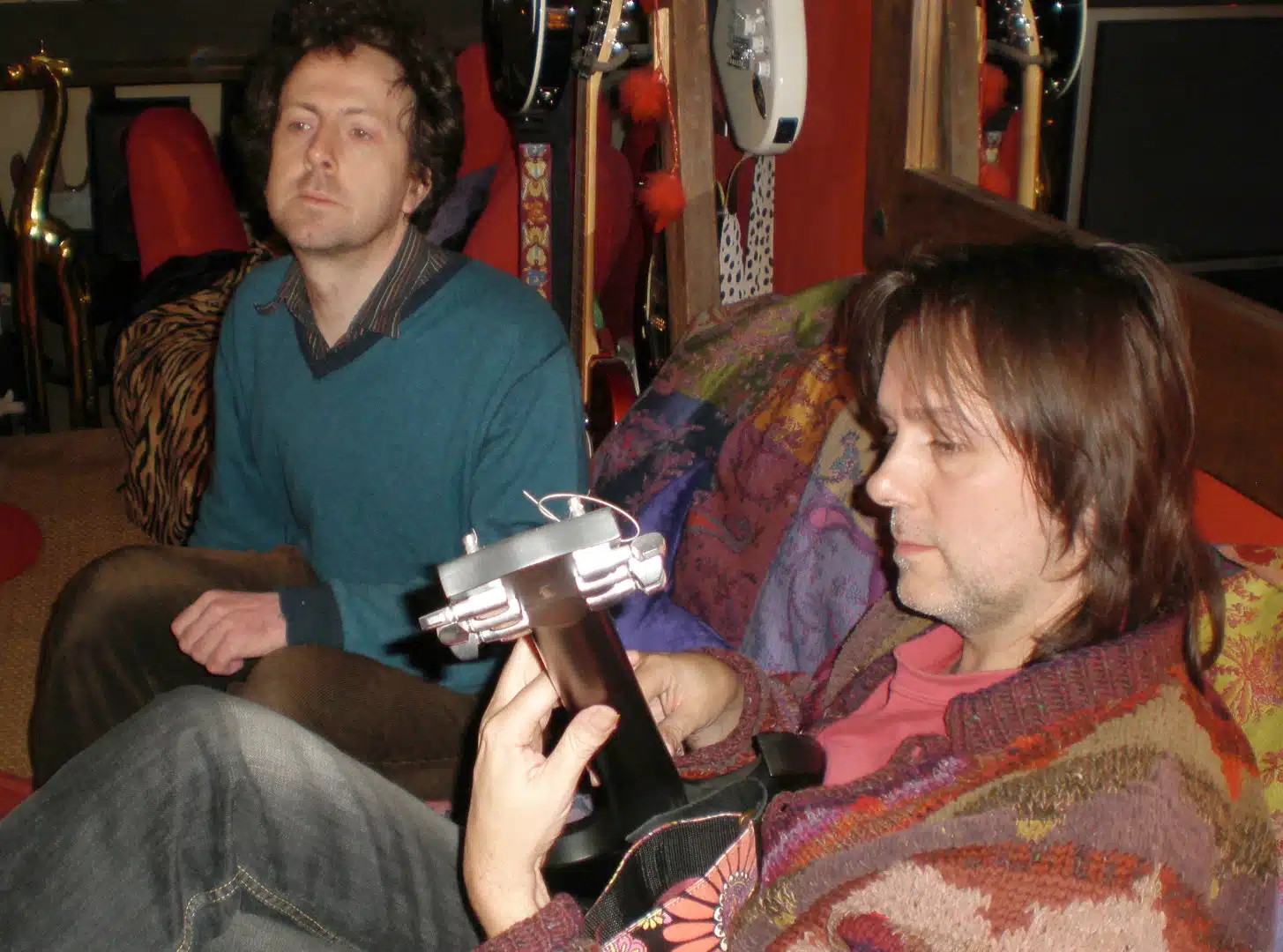
Steve and Matthew in a recording session.
Even then, remote work was possible. Our drummer, Paul Robinson, sent his parts online. He had also played on Video Killed the Radio Star.
We then reused parts from the songs throughout the story. These included guitar, percussion and strings. As a result, the music and drama felt closely linked.

Tea, guitars and plenty of conversation were all part of the creative process.
How We Would Create an Immersive Audiobook Today
If we started Lost on Infinity today, many more tools would be available. Creating an immersive audiobook is now more accessible for small teams and home studios.
We might explore:
- Spatial audio: voices, rain or footsteps moving around the listener
- Ambisonic sound: audio designed to create a three-dimensional listening space
- Branching stories: different routes based on choices made by the listener
- Interactive moments: replayable scenes, decisions or bonus material
- Adaptive sound: mixes designed for headphones, cars or other environments
Modern plugins now help small teams create ambitious audio at home. However, technology should always serve the story. It should never take over.
Five lessons we would share with new creators
- Put the story first.
- Good recording matters more than an impressive equipment list.
- Give performers enough time.
- Use music and sound effects carefully.
- Test the finished production with real listeners.
How to Create an Immersive Audiobook at Home
You do not need a huge studio to create an immersive audiobook at home. However, you do need a clear plan. A quiet room and enough editing time also matter.
1. Plan the Production
- Make sure you own or control the necessary rights.
- Mark dialogue, narration, music and sound cues in the script.
- Create a simple sound map for each scene.
- Decide which moments genuinely need music or effects.
2. Prepare the Recording Space
- Choose the quietest room available.
- Use soft furnishings to reduce echoes.
- Switch off noisy appliances where possible.
- Listen for traffic, heating systems and computer fans.
3. Choose Your Equipment
- Use a reliable microphone.
- Add a pop filter to reduce harsh consonant sounds.
- Use closed-back headphones while recording.
- Record into software such as Logic Pro, Reaper or Pro Tools.
4. Record Complete Scenes
- Warm up voices before recording.
- Record complete exchanges where possible.
- Capture several versions of important emotional lines.
- Keep notes about the strongest takes.
5. Add Music and Sound Effects
- Begin with subtle atmosphere.
- Place sound effects only where they help the listener.
- Keep dialogue clear and easy to understand.
- Use music to support emotion rather than fill every gap.
6. Edit and Polish the Audio
- Remove distracting noise and unwanted breaths.
- Balance the volume of different voices.
- Use equalisation carefully to reduce clashing frequencies.
- Smooth transitions between scenes.
7. Test the Finished Mix
- Listen through headphones.
- Test the audio through a phone speaker.
- Play it in a car.
- Ask children and adults for honest feedback.
8. Release, Learn and Improve
- Share a sample chapter before releasing the full story.
- Notice where listeners lose interest or become confused.
- Make changes where needed.
- Use each production to improve the next one.
You can follow the timeline of creating our Rockford Stories here.
Hear the results for yourself
Curious about how narration, music, songs and sound effects can work together? Listen to the opening chapters of Lost on Infinity and hear how we created an immersive audiobook for families and schools.

Frequently Asked Questions
What makes an audiobook immersive?
An immersive audiobook combines acting, music and sound effects. As a result, the listener can feel present inside the story. However, the extra audio should support the words rather than cover them.
Can I create an immersive audiobook at home?
Yes. To begin, use a quiet room, a reliable microphone and suitable software. Soft furnishings can reduce echoes. More importantly, careful acting and editing matter more than expensive equipment.
Which software can I use to record an audiobook?
Logic Pro, Reaper and Pro Tools can all record and edit audiobooks. However, the best choice depends on your budget and experience. Your computer setup may also affect the decision.
Do I need music and sound effects in every scene?
No. In fact, silence can be powerful. Add music when it improves the mood or explains an action. Too many layers can make speech harder to follow. Read more about how we created sound effects here.
How long does it take to produce an immersive audiobook?
Production time varies. First, consider the length of the story and the number of actors. Music and sound design also add time. Therefore, a full drama takes longer than a simple narration.
Can audiobooks help reluctant readers?
Audiobooks can help children enjoy stories without stopping at every hard word. In addition, children hear fluent and expressive reading. Following the printed text at the same time may offer extra support.
The Journey Is Part of the Reward
Recording Rockford’s Rock Opera was not quick or easy. In fact, the work took years.
Even so, it was a brilliant experience. We worked with friends and laughed in the attic. More than 20 years later, the result still means a great deal to us.
Spatial audio and AI tools were not part of the original production. Today, we would explore some of them. Even so, the key ingredient has not changed.
The story must come first.
Every creator makes mistakes. At times, the work may not feel worthwhile. Then, one day, a listener may send a message like this:
That is the moment you understand what immersive audio can do.
Discover more through our ecological adventure stories
Lost on Infinity is a musical adventure story that introduces children to extinction, biodiversity and biomimicry through storytelling and original songs.
Get the Lost on Infinity illustrated book with free musical audiobook – a totally immersive experience.
Listen to the first part of the Lost on Infinity audiobook and watch the animated adventure FREE on Apple App Store and Google Play.
Download our FREE lesson plans and slides about Extinction and Biomimicry. We also have a selection of FREE classroom activities on our website.
For even more exploration of the natural world, tune in to our Stories, Science & Secrets podcast for kids. Join Matthew, Elaine, Steve Punt and special guests, as we delve into the fascinating world of biomimicry and the inspiring ways science learns from nature’s genius.
Every creature has a secret, and every life is precious.
______________________________________________________________________
About the creators:
Steve Punt is a writer and broadcaster, known for his work across BBC radio and television, and co-creator of Rockford’s Rock Opera.
Matthew Sweetapple is a writer and producer of Rockford’s Rock Opera, focusing on adventure-led environmental narratives.
Elaine Sweetapple is an illustrator and co-creator of Rockford’s Rock Opera, writing about nature, biomimicry, and storytelling.
Rockford’s Rock Opera adventures are written by professional writers, illustrated by artists, and recorded by real musicians, actors and producers. Crafted by humans, the hard way 🎶😊💚