

With more people than ever creating audiobooks, whether adapting existing works or producing original stories, we’re increasingly asked how we created Rockford’s Rock Opera, our dramatised, musical audio adventure.
What gear did we use? What mistakes should be avoided? And what would we do differently now?
Here’s everything we’ve learned, and why immersive audio storytelling isn’t just growing—it’s transforming how children, families, and schools experience stories. High-quality immersive audiobooks matter more than ever.
Why Invest in a High-Quality Immersive Audiobook?
When you’re producing an audiobook, especially one that includes music, sound effects, and dramatic performances—you can’t wing it. Listeners notice quality. And if the production distracts or jars, they drop off.
According to Scribe Media, essential standards for a professional, immersive experience include:
- Engaging, characterful narration – not just reading, but storytelling
- A controlled recording environment – either a treated home studio or professional space
- Clean, crisp audio with minimal mouth noise, hums, or plosives
- Seamless transitions and consistent tone throughout the story
These are non-negotiables. They’re the foundations. If your listener is drawn out of the story by bad sound or inconsistent pacing, it doesn’t matter how good the story is, they won’t stay.
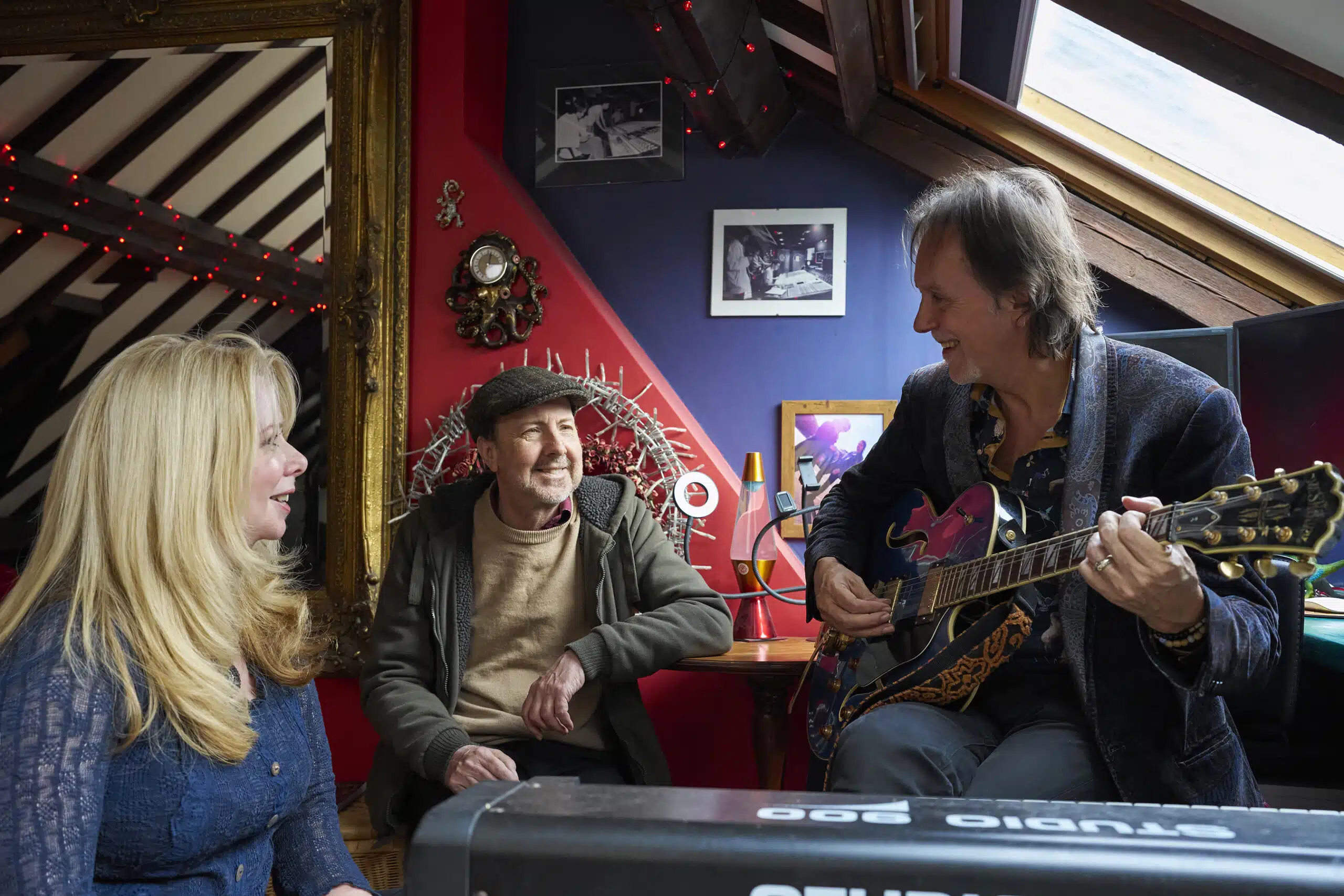
Creating the award-winning, musical audiobook Lost on Infinity.
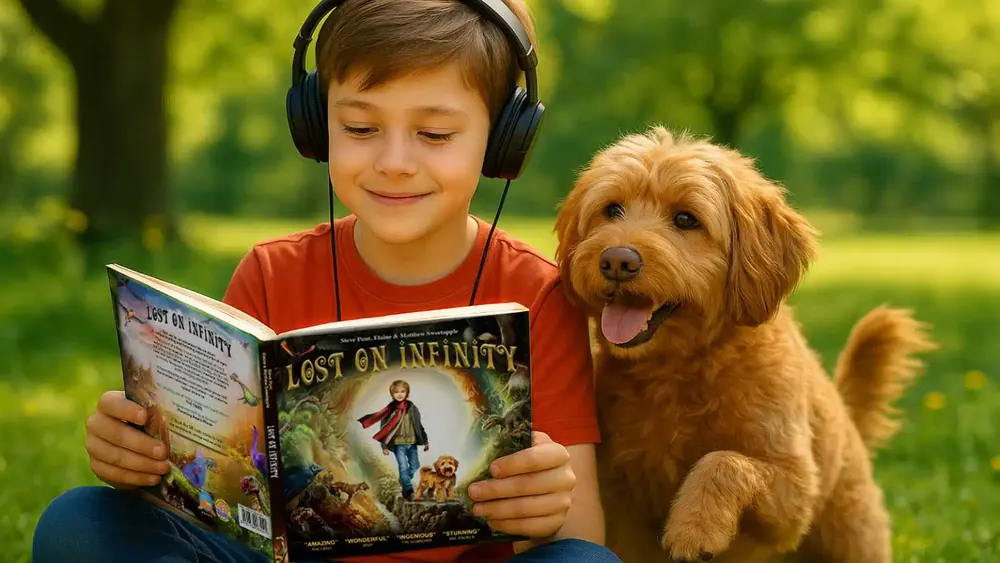
Far away in the Sea of Tranquillity is the Island of Infinity, home to the last of every extinct species. Infinity has a secret for the world but Moog, a boy from Battersea in London, and Rockford his dog are the only ones who can deliver its message. Travelling to Infinity, Moog and Rockford are drawn into an amazing adventure that threatens the whole human race. But it’s an adventure that heralds a hopeful new dawn in human understanding of our place in creation.
Featuring and scripted by BBC writer Steve Punt. Music by Matthew Sweetapple and Design by Elaine Sweetapple. It’s a story about extinction and the effect man is having on the planet – a positive and hopeful story enchanting children and adults across the world.
The Audiobook Boom and Why Immersive Audio Stands Out
The appetite for audiobooks is growing fast, especially in the UK:
- Audiobook revenue generated by UK publishers rose by 31% between 2023 and 2024, with income from audiobooks reaching a record £268m last year (Source: The Guardian)
- A recent survey of 37,000 children (aged 8–18) found 42.3% enjoyed listening to audiobooks—more than enjoyed reading print for the first time
(Source: The Literacy Trust)
These numbers show that immersive audio isn’t a luxury, it’s a strategic advantage for creators. And for families and schools, it’s more than entertainment, it’s a tool for education, connection, and access.
Why Audiobooks Matter for Struggling and Reluctant Readers
For young readers, especially those who find reading difficult, high-quality audiobooks can transform access to stories.
Research from ERIC, Reading Rockets, and OverDrive Education shows:
- Audiobooks support comprehension, vocabulary, and fluency
- They help children access literature above their reading level
- Read-alongs and well-paced narration support decoding and confidence
- They provide a bridge, not a shortcut—especially for neurodiverse learners or those with reading anxiety
A well-produced audiobook isn’t a crutch. It’s a gateway to literacy, enjoyment, and equality in the classroom.
OLYMPUS DIGITAL CAMERA
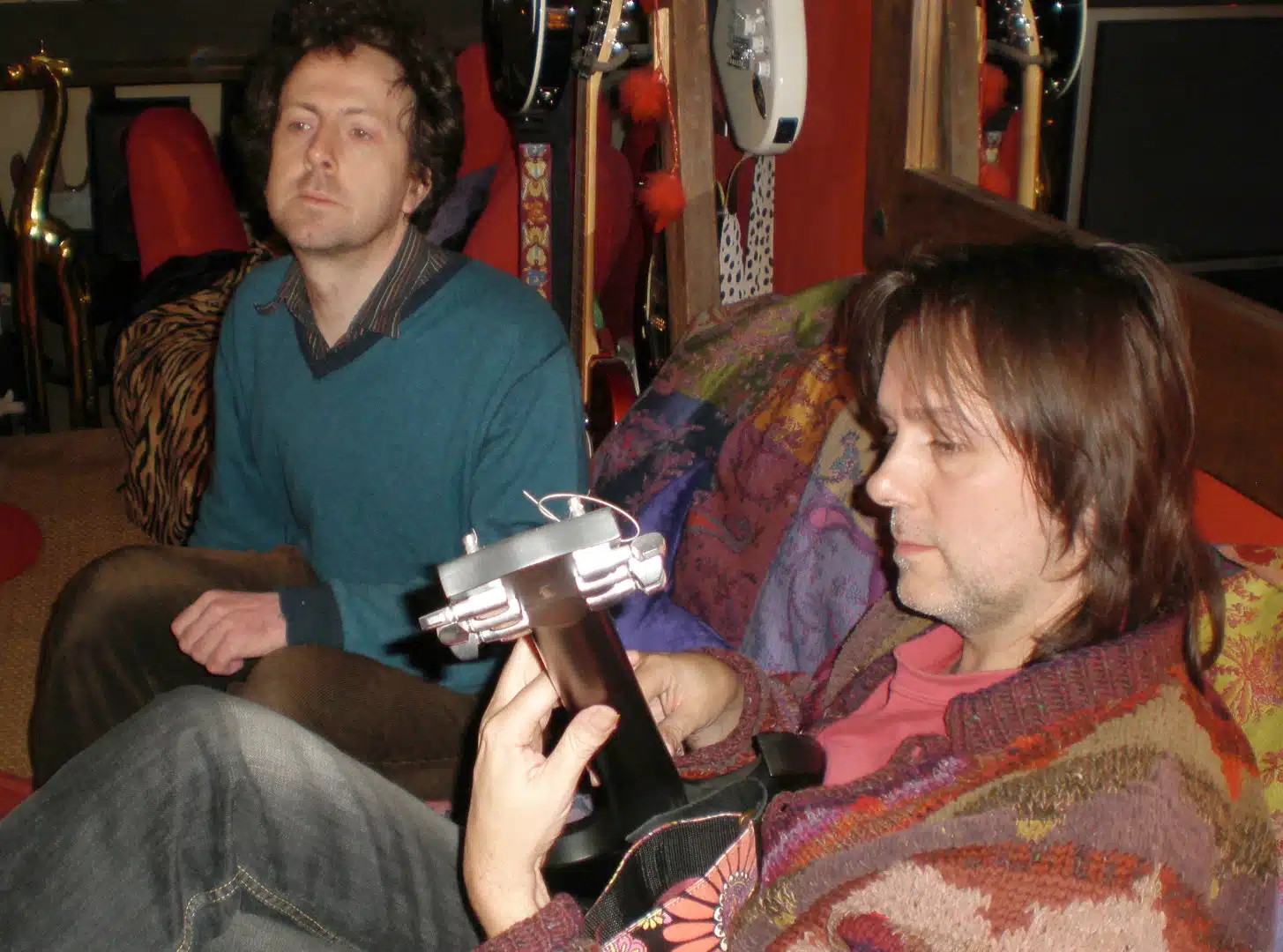
Our Journey: How We Made Rockford’s Rock Opera in an Attic
Back in the early 2000s, when we started recording Lost on Infinity, things were a little different. There weren’t many online tutorials, plugins, or AI tools. But there was plenty of creativity.
We used:
- Apple Logic Pro as our Digital Audio Workstation (DAW)
- A Neumann TLM-103 microphone for high-quality vocal recordings
- A DIY home studio in our attic—with less-than-perfect soundproofing (cats meowing and trains in the background were regular guests!)
What we lacked in gear, we made up for in care, patience, and experimentation.
Sound Effects: Beans, BBC Records and Better Options Today
We created many of our own sound effects:
- Doors banging
- Beans shaken in boxes for scurrying insects
- Foil, fabric, footsteps on gravel—all recorded at home
But we also used vintage BBC Sound Effects LPs from the 1970s, which added a wonderful layer of texture.
Today, you don’t need to rattle tins. There are fantastic sound libraries like Pond5, where you can buy professional effects for a few pounds. And a growing number of AI-generated sound tools are coming online too.
We haven’t tried those yet, but in general, we always recommend paying for the content you use. Creatively and karmically, it just feels better.
Working Chapter-by-Chapter
To stay focused, we recorded the story one chapter at a time. The first step was a full read-through of the script—narration and character voices—to map out the pace, rhythm, and story arc.
Some of these original recordings made it into the final cut because they had a relaxed tone that couldn’t be recreated.
Songs were pre-recorded, then integrated into the story. Sometimes just fragments—motifs or textures—were used earlier in a chapter to build toward a full song moment later.
Collaborating with Friends and Pros
Most voices were recorded in-person—Steve Punt came to the attic to bring his characters to life.
But even back then, we embraced remote collaboration. Paul Robinson, our drummer (who also played on “Video Killed the Radio Star”), sent us his parts online. And we used those song stems—guitar lines, percussion, strings—to create mood and texture throughout the story.
The music and story were never separate. They were braided together from the start.
What We’d Do Differently Today: Lost on Infinity 2.0?
If we were creating Lost on Infinity from scratch today, we’d be tempted to include:
- Spatial audio – where voices, footsteps, or rain move around the listener
- Adaptive audio – where the mix adjusts based on the listener’s environment (bus, café, headphones)
- Branching paths – where Moog explores different routes depending on listener choices
- Interactive moments – replayable scenes, character decisions, or optional bonus content
With tools like DearVR, ambisonic plugins, and spatial mixing platforms now available, small creators can dobig things—often from a home studio.
Practical Tips: How to Make an Immersive Audiobook at Home
- Plan Everything
- Own your rights
- Annotate your script for dialogue, sound cues, and music
- Create a sound map for every scene
- Set Up Your Studio
- Use a quiet, treated room
- Invest in a good mic, interface, pop filter, and closed-back headphones
- Use DAWs like Logic, Reaper, or Pro Tools
- Record with Purpose
- Warm up
- Record full scenes for emotional consistency
- Take multiple takes of emotional lines
- Add Sound & Music
- Layer subtle ambience under narration
- Place effects where needed (not everywhere!)
- Weave music carefully—not under everything, just where it lifts emotion
- Edit & Polish
- Use EQ to avoid clashing frequencies
- Smooth transitions with automation
- Test your mix on phones, cars, headphones
- Release & Improve
- Share a sample chapter to test
- Gather feedback
- Iterate, rework, improve
- Share your work with families, schools, and storytellers
Final Thought: The Journey Is the Reward
Recording Rockford’s Rock Opera wasn’t fast, and it wasn’t easy. It took years. But it was joyful. We worked with friends. We laughed in the attic. We made something we’re still proud of 20 years later.
We didn’t use spatial audio or AI tools back then—but we would now. And we encourage you to explore them. But whatever tools you use, the story comes first. Get that right, and the rest follows.
You’ll make mistakes. You’ll wonder if it’s worth it. But one day, someone will message you:
“The whole family listened transfixed to your story on a long drive, not a peep. Never known anything like it.”
That’s the moment you realise what immersive audio can do.
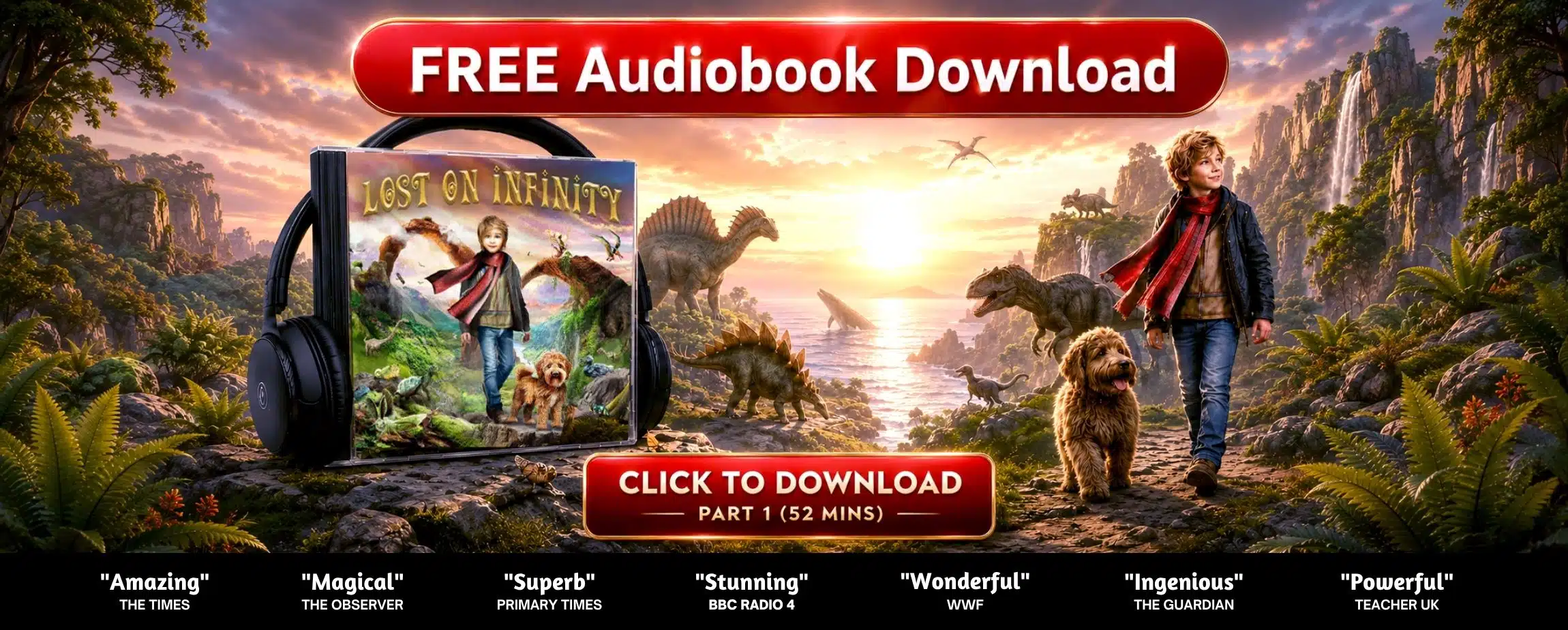
In 2026 our audiobook became Lost on Infinity illustrated book you can read-along while you listen to the audio for the full immersive experience.
Lost on Infinity is a musical adventure story that introduces children to extinction, biodiversity and biomimicry through storytelling and original songs.
Download our FREE lesson plans and slides about Extinction and Biomimicry. We also have a selection of FREE classroom activities on our website.
For even more exploration of the natural world, tune in to our Stories, Science & Secrets podcast for kids. Join Matthew, Elaine, Steve Punt and special guests, as we delve into the fascinating world of biomimicry and the inspiring ways science learns from nature’s genius.
Every creature has a secret, and every life is precious.
About the creators:
Elaine Sweetapple is an illustrator and co-creator of Rockford’s Rock Opera, writing about nature, biomimicry, and storytelling.
Matthew Sweetapple is a writer and producer of Rockford’s Rock Opera, focusing on adventure-led environmental narratives.
Steve Punt is a writer and broadcaster, known for his work across BBC radio and television, and co-creator of Rockford’s Rock Opera.
Rockford’s Rock Opera adventures are written by professional writers, illustrated by artists, and recorded by real musicians, actors and producers. Crafted by humans, the hard way 🎶😊💚