

Discover nature’s illusion experts, animals with fake eyes and faces that deter predators.
Evolution has produced remarkable markings that look like eyes or even entire faces. These patterns are called ocelli, meaning “little eyes”. They appear on wings, fur, feathers and skin. Unlike camouflage, these animals are not trying to disappear. They are trying to be noticed in a very specific way. A predator that thinks it has been seen may hesitate. That hesitation can mean survival.
Below are five powerful examples of animals using false eyes or faces as protection.
Himalayan griffon vulture – exaggerating the stare
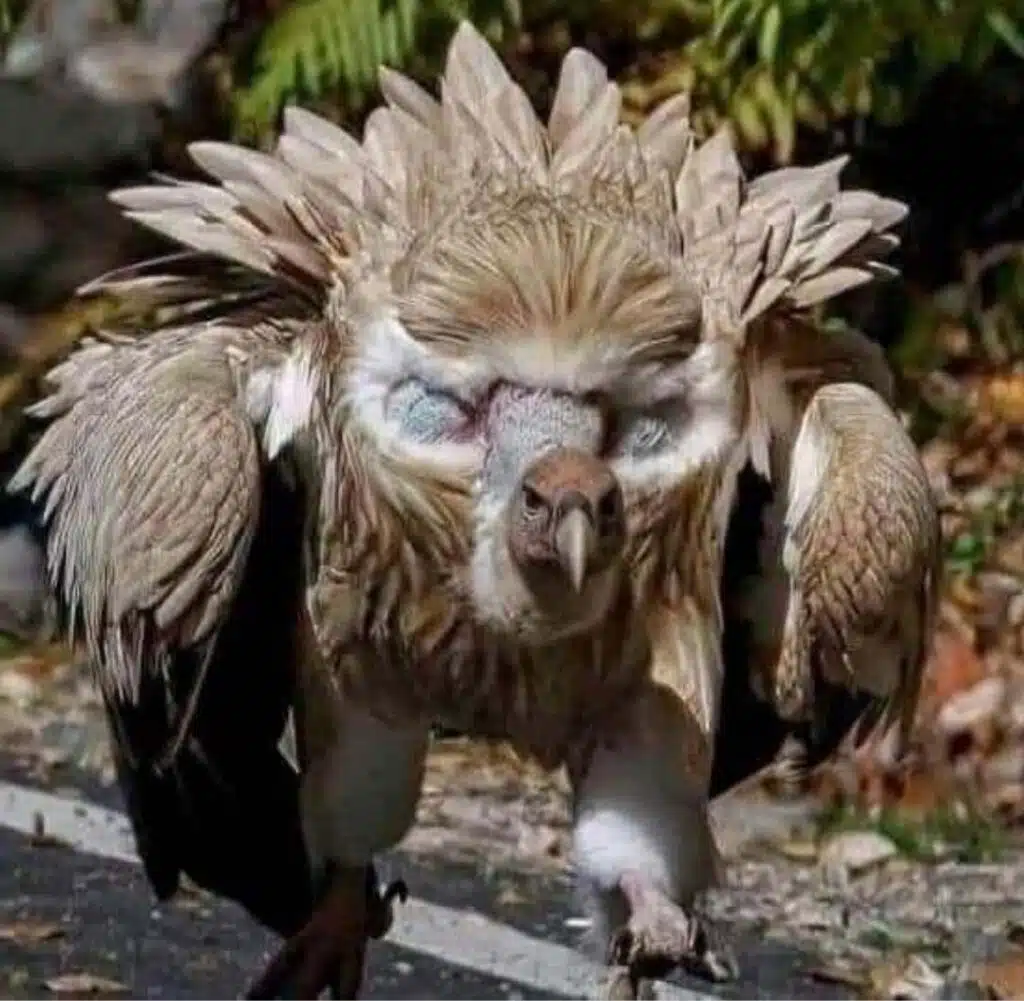 The Himalayan griffon vulture can raise feathers around its head to create a dramatic circular facial shape. The pale ruff emphasises the eyes, making them appear larger and more intense.
Birds often use posture to communicate strength. Enlarging the apparent size of the face increases perceived confidence.
Possible deterrent effect:
• stronger gaze signal
• increased perceived size
• visual emphasis on awareness
• intimidation through posture
Threat displays that exaggerate facial features are well documented in large birds. The effect is striking.
Tigers – eyes on the backs of the ears
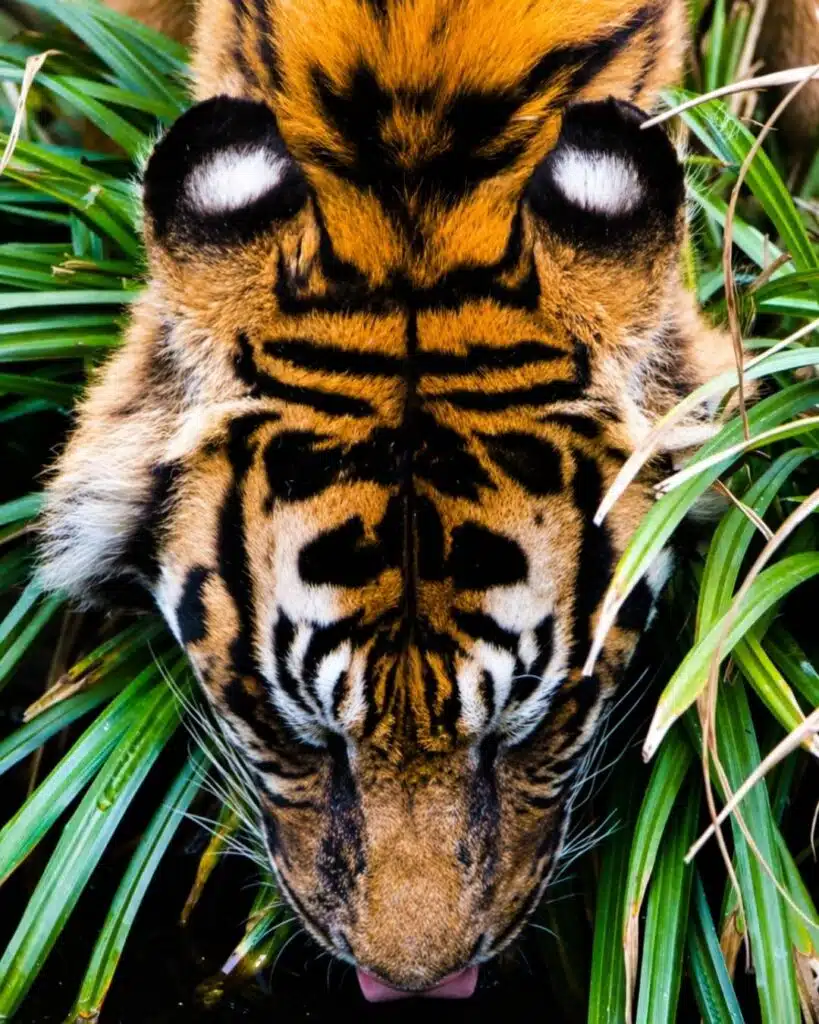
Tigers have striking white patches on the backs of their ears that closely resemble a pair of watchful eyes. These markings, known as ocelli, stand out sharply against the black fur surrounding them. This effect becomes especially noticeable when a tiger lowers its head to drink or move quietly through grass. The real eyes disappear from view, but the bright white ear spots remain clearly visible, giving the impression that the animal is still watching everything around it.
Researchers believe these markings may serve several useful purposes.
• Deterring surprise attacks
Many predators prefer to attack from behind so they are not seen. If another animal believes the tiger is already watching, it may hesitate before approaching. Even a short pause can interrupt the instinct to attack.
• Signalling awareness and confidence
Forward-facing eyes are associated with predators rather than prey. The appearance of being watched can signal strength and alertness, discouraging confrontation.
• Helping cubs follow their mother
Tiger cubs rely heavily on visual cues to stay close and avoid danger. The bright white ear markings may act as high-contrast guides, helping cubs track their mother through dense forest or tall grass, particularly in low light.
• Communication between tigers
The markings may also play a role in signalling mood or intention. Subtle ear movements combined with the high-contrast spots may help communicate warning or alertness to other tigers without needing sound.
Evolution does not always require complex solutions. Sometimes the appearance of being watched is enough to change the outcome of an encounter.
Owl butterfly – the face of a predator
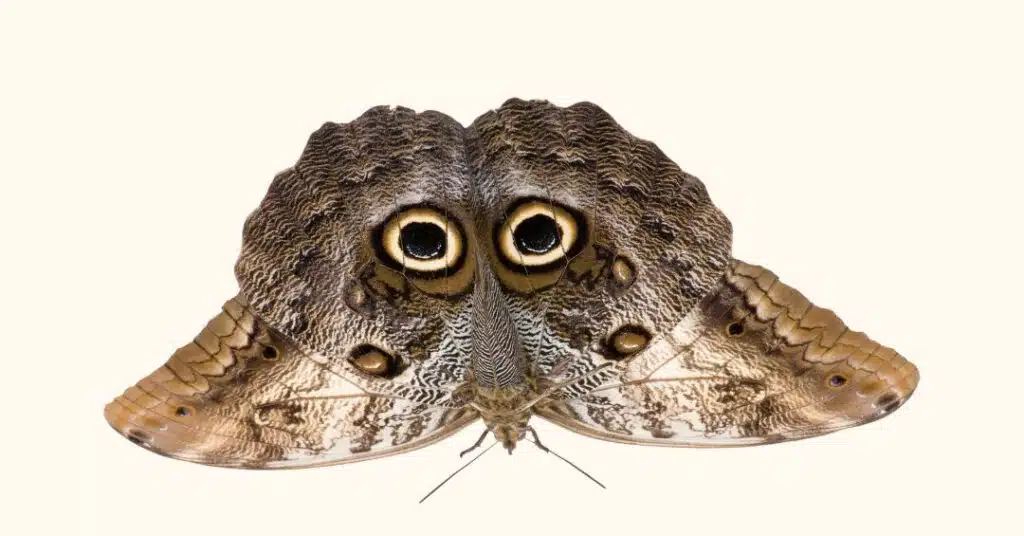 Owl butterflies display enormous eye spots that resemble an owl’s face. Birds may hesitate because owls prey on them.
The illusion works because predators make rapid decisions based on pattern recognition.
Even a brief pause can allow escape.
Eye spot research in behavioural ecology consistently shows reduced attack rates when large circular eye patterns are visible.
Spicebush swallowtail caterpillar – a convincing snake face
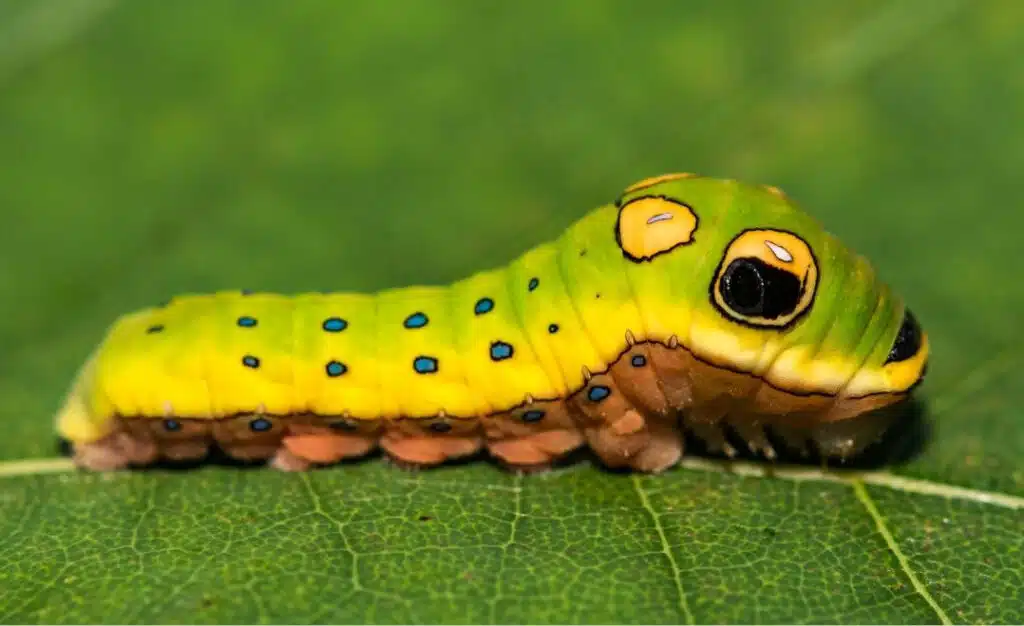 The spicebush swallowtail caterpillar creates one of the most convincing false faces in nature.
Its large eye markings resemble the head of a small green snake. When threatened, the caterpillar changes posture slightly, strengthening the illusion.
Birds often avoid snakes. Even a rough resemblance can reduce attack likelihood. This is not camouflage. The caterpillar is clearly visible. It is pretending to be something dangerous.
Northern pygmy owl – eyes on the back of the head
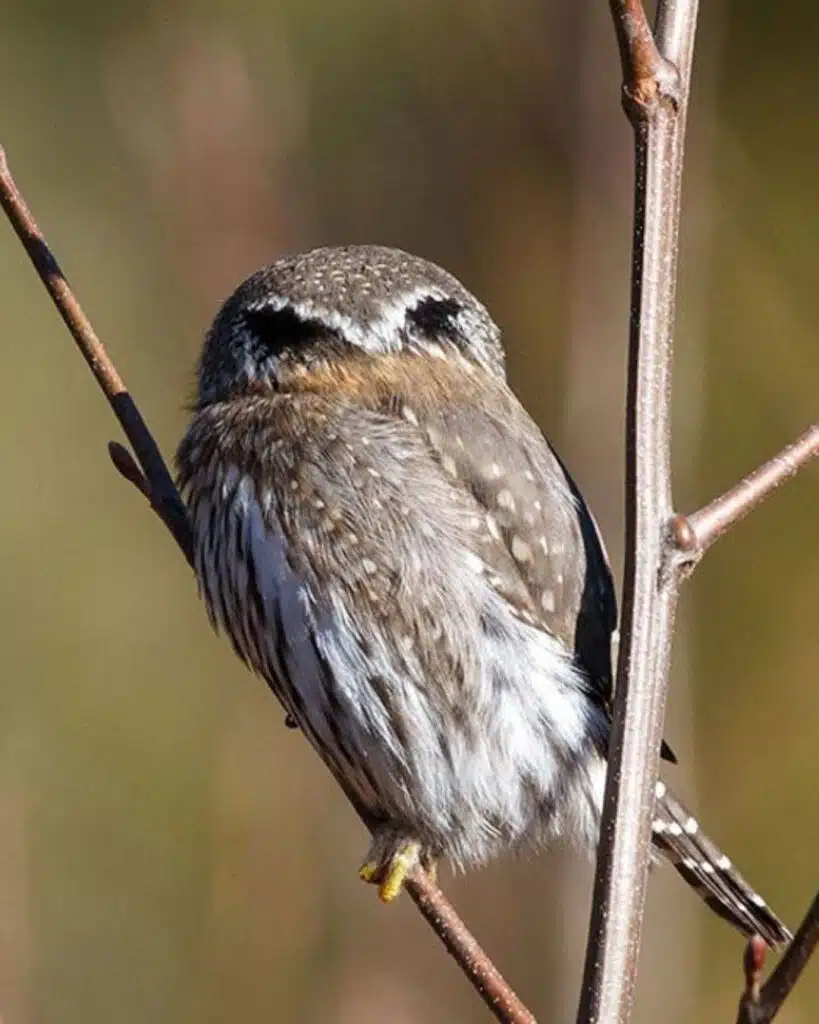 The Northern pygmy owl has dark patches on the back of its head that resemble eyes. These markings may help deter attacks from behind.
According to the Audubon Society, these false eyes may make predators believe they have been spotted.
Possible benefits:
• reduces surprise attacks
• signals alertness even when looking away
• discourages ambush behaviour
Why fake eyes work
Predators often rely on instinct and speed rather than careful analysis.
Visual signals influence behaviour immediately:
• eyes suggest awareness
• large eyes suggest larger animals
• a visible gaze discourages ambush
• confusion disrupts attack accuracy
Evolution has independently produced false eyes across insects, birds, mammals and fish. This suggests strong survival value.
Even humans have tested the idea. In parts of India, people have worn masks with eyes on the back of the head in tiger habitats. Early studies suggested attacks reduced because ambush predators prefer approaching unseen prey.
Biomimicry Insight
False eye patterns inspire human design. Researchers are exploring:
• patterns on wind turbines to reduce bird collisions
• visual signals in robotics
• markings that increase visibility to animals
Nature often solves perception problems in elegant ways.
Discover more through story and song🎶😊💚
Lost on Infinity is a musical adventure story that introduces children to extinction, biodiversity and biomimicry through storytelling and original songs.
Get the Lost on Infinity illustrated book with free musical audiobook – a totally immersive experience.
Listen to the first part of the Lost on Infinity audiobook and watch the animated adventure FREE on Apple App Store and Google Play.
Download our FREE lesson plans and slides about Extinction and Biomimicry. We also have a selection of FREE classroom activities on our website.
For even more exploration of the natural world, tune in to our Stories, Science & Secrets podcast for kids. Join Matthew, Elaine, Steve Punt and special guests, as we delve into the fascinating world of biomimicry and the inspiring ways science learns from nature’s genius.
Every creature has a secret, and every life is precious.
About the creators:
Elaine Sweetapple is an illustrator and co-creator of Rockford’s Rock Opera, writing about nature, biomimicry, and storytelling.
Matthew Sweetapple is a writer and producer of Rockford’s Rock Opera, focusing on adventure-led environmental narratives.
Steve Punt is a writer and broadcaster, known for his work across BBC radio and television, and co-creator of Rockford’s Rock Opera.