

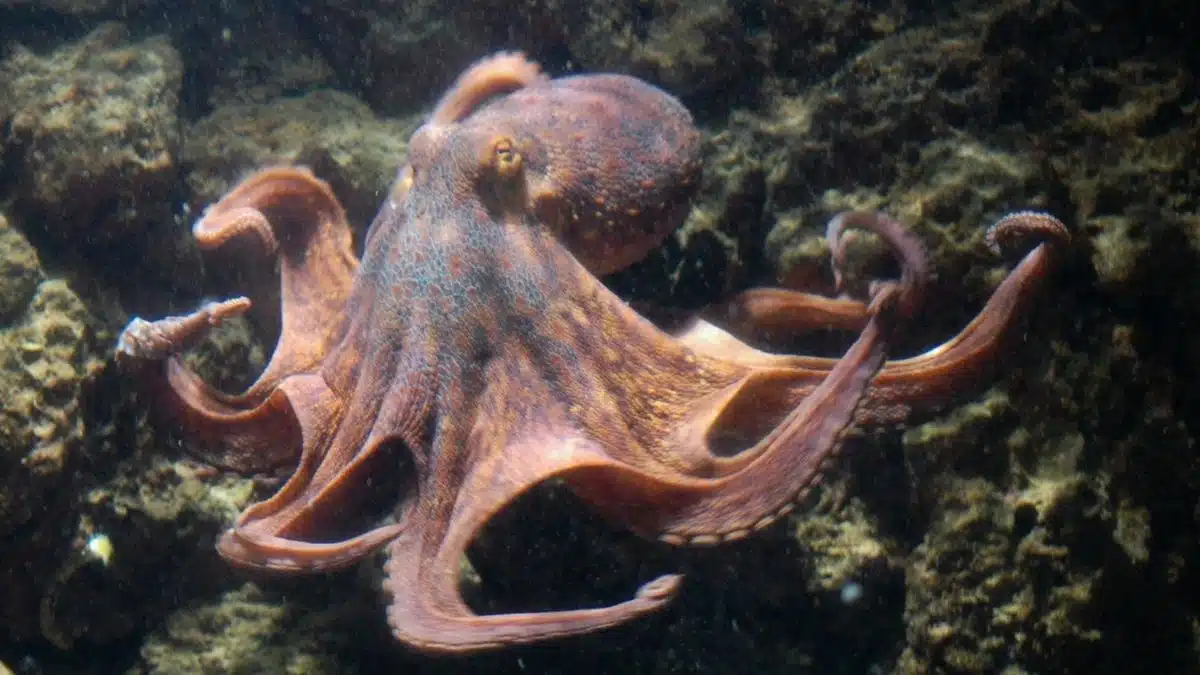
An octopus doesn’t just change colour. It changes colour and texture at the same time, in an instant, without thinking about it. One second it looks smooth like sand. The next it looks bumpy like coral. Amazing creatures that solved a problem engineers are still struggling with.
That’s why a team at Penn State and Georgia Tech spent years trying to build a material that mimics it.
What they actually built
Using a new printing method, the researchers made a hydrogel material that can change colour, change texture and change shape, all in one system. Earlier attempts could usually manage one of those tricks at a time. This one does all three together, the way real octopus skin does.
It’s not a product yet. It’s a lab demonstration, published in Nature Communications. The next step, according to the researchers, is working out how to scale it up.
Why this octopus skin a hard thing to copy?
Most materials are built to do one job. Rubber stretches. Metal conducts electricity. Paint changes colour if you mix in the right dye. Getting a single material to do several of those jobs at once, and to switch between them instantly, is a completely different challenge.
An octopus manages it with a combination of pigment sacs it can expand and contract, and tiny muscles under its skin that raise and lower to change texture. Both systems work together, controlled in real time, without the animal consciously planning each change. Copying that with man-made materials means building something that can sense its surroundings, respond fast, and hold several different properties (colour, texture, shape) in one flexible sheet, rather than stacking separate layers on top of each other. That’s the part that’s kept engineers stuck for years. This new hydrogel is one of the first materials to genuinely combine those functions rather than trade one off against another.
What we’d actually use this new hydrogel for
This isn’t change for the sake of it. A few real reasons this kind of material matters:
Camouflage that works in more than one way at once.
Current camouflage patterns are fixed. A material that shifts colour and texture together could hide equipment, vehicles or clothing far more convincingly, and adapt as the surroundings change.
Softer, smarter robots.
Robots that work in unpredictable places, search and rescue, deep sea exploration, tight or awkward spaces, need a “skin” that can change grip and shape on the fly rather than relying on fixed metal parts. A material that behaves like this gets a robot closer to moving the way an actual animal does.
Hidden information and security features.
Because the material can be programmed to reveal an image or pattern only under specific conditions, it has a use in packaging, security tags or documents where you want something readable only at the right moment.
Devices that respond to how you’re using them.
A surface on a phone, tool or wearable that changes its texture depending on what you’re doing (better grip when you need it, smoother when you don’t) is a genuinely new kind of interface, not just a design gimmick.
None of that exists on shelves yet but we have proof that it’s possible, and a working method for building it. That’s usually the hardest part.
So, this is biomimicry in action. Nature solved the problem first. Engineers are just catching up.
Amazing Octopus Facts
While we’re on the subject, here’s what makes an octopus one of the strangest animals in the ocean.
It has nine brains. One main brain, plus a mini brain in each of its eight arms. Each arm can taste, feel and react on its own, without waiting for instructions from the main brain.
It has three hearts. Two pump blood to the gills. One pumps it round the rest of the body.
Its blood is blue. It uses a copper-based molecule to carry oxygen, not the iron-based one we use.
It has no bones at all. That’s how it squeezes through a gap the size of its own eyeball.
It can regrow a lost arm.
Its skin isn’t just for colour. It’s covered in tiny muscles that change texture too, which is the exact trick the smart skin researchers were trying to copy.
Most octopuses only live one to two years. Despite being some of the smartest animals in the ocean.
An octopus is proof that some of the best engineering on the planet has already been done, by animals, over millions of years. Humans just have to be curious enough to notice it and patient enough to copy it properly.
That’s the whole idea behind biomimicry, and it’s a fascinating topic for children. Look closely at nature before you assume you need to invent something from scratch.
Read more about biomimicry and see our amazing database of Creature Secrets
For children who love animals
Want to discover more about the remarkable minds of animals? From bees and octopuses to horseshoe crabs and badgers, evidence of animal sentience continues to grow. Find out what science tells us about how other creatures experience the world in Sentient Souls – Do Animals Feel Pain?

Discover more through our ecological adventure stories
Lost on Infinity is a musical adventure story that introduces children to extinction, biodiversity and biomimicry through storytelling and original songs.
Get the Lost on Infinity illustrated book with free musical audiobook – a totally immersive experience.
Listen to the first part of the Lost on Infinity audiobook and watch the animated adventure FREE on Apple App Store and Google Play.
Download our FREE lesson plans and slides about Extinction and Biomimicry. We also have a selection of FREE classroom activities on our website.
For even more exploration of the natural world, tune in to our Stories, Science & Secrets podcast for kids. Join Matthew, Elaine, Steve Punt and special guests, as we delve into the fascinating world of biomimicry and the inspiring ways science learns from nature’s genius.
Every creature has a secret, and every life is precious.
______________________________________________________________________
About the creators:
Steve Punt is a writer and broadcaster, known for his work across BBC radio and television, and co-creator of Rockford’s Rock Opera.
Matthew Sweetapple is a writer and producer of Rockford’s Rock Opera, focusing on adventure-led environmental narratives.
Elaine Sweetapple is an illustrator and co-creator of Rockford’s Rock Opera, writing about nature, biomimicry, and storytelling.
Rockford’s Rock Opera adventures are written by professional writers, illustrated by artists, and recorded by real musicians, actors and producers. Crafted by humans, the hard way 🎶😊💚