
World Pangolin Day is an annual awareness day focuses attention on pangolins, which are mammals most people have never met but are among the most trafficked and threatened on Earth.
A new CITES (Convention on International Trade in Endangered Species) assessment shows that more than half a million pangolins or their parts were seized in illegal trade operations between 2016 and 2024. Traffickers shift routes frequently to avoid detection, with routes spanning Africa, Asia and Europe.
Communities choosing protection in Nagaland
In India’s Nagaland, the United Sangtam Likhum Pumji has strengthened a community ban on pangolin hunting and trade. This local decision reinforces accountability and shows how local ownership of conservation can add a powerful layer of protection on the ground.
That matters because trafficking is not just a wildlife problem. It is a systems problem driven by demand, money and global trade networks.
For children and learners the message can be simple: people can decide to protect what matters and those decisions can spread.
Meet the pangolin: not a reptile or armadillo but a unique mammal
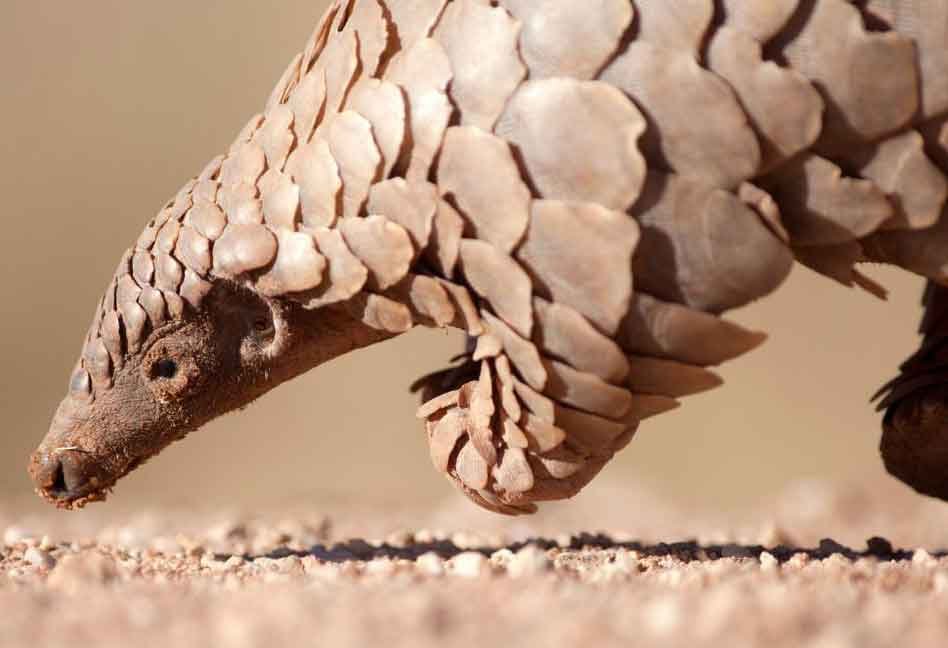 Pangolins are mammals covered entirely in overlapping keratin scales – the only mammals in the world with this feature.
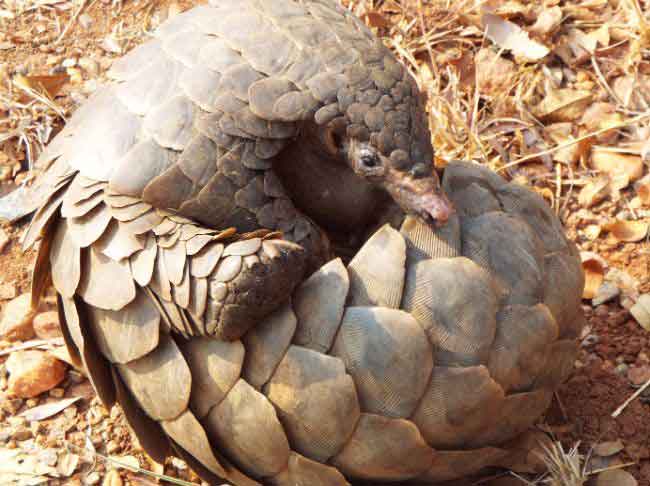
Those scales make a pangolin look like a small walking pinecone. When threatened, a pangolin rolls into a tight ball using its armour as a defence.
Contrary to myth, there is no evidence that pangolin scales have health benefits. Demand for scales persists because of traditional medicine beliefs despite there being no scientific support for those claims.
There are eight pangolin species globally. All are at risk and protected under the highest level of international trade restriction (CITES Appendix I).
Latest global news about pangolins
Global trafficking trends Traffickers frequently change routes to evade law enforcement. New analysis finds 74 countries or territories linked to illegal pangolin trade networks with complex routes across continents.
Nigeria conservation actions In Nigeria several conservation groups have called for stronger laws on World Pangolin Day 2026 and hosted public lectures to tackle illegal trade. The Pangolin Conservation Guild is working with youth and wider communities to raise awareness and engage future guardians.
Global seizure data Between 2016 and 2024 more than half a million pangolins were seized in trafficking operations. Conservationists note this is likely a fraction of the true number taken from the wild.
These stories show that pangolin protection is increasingly part of scientific, legal and community discussions worldwide.
Pangolin traits that bring science to life
-
Living armour built from keratin scales that work against natural predators but not humans.
-
Long tongues and powerful claws specialised for eating ants and termites.
-
Less well-known species that feel almost like a secret chapter of the natural world.
A lively video or educational clip can help make these facts tangible for learners.
 Why pangolins matter for nature
 Why pangolins matter for nature
Pangolins help regulate insect populations and their burrows can create habitat for other species. Protecting a pangolin is also protecting the wider web of relationships in its ecosystem.
Hope through awareness and action
World Pangolin Day exists to strengthen attention, funds and public backing for pangolins that often disappear quietly both in nature and from public awareness. Community steps like those in Nagaland are part of a growing picture where protection depends on local leadership plus global support.
When readers feel the weight of extinction news, a simple truth remains: protection begins when someone notices.
Pangolins and biomimicry: when nature inspires design
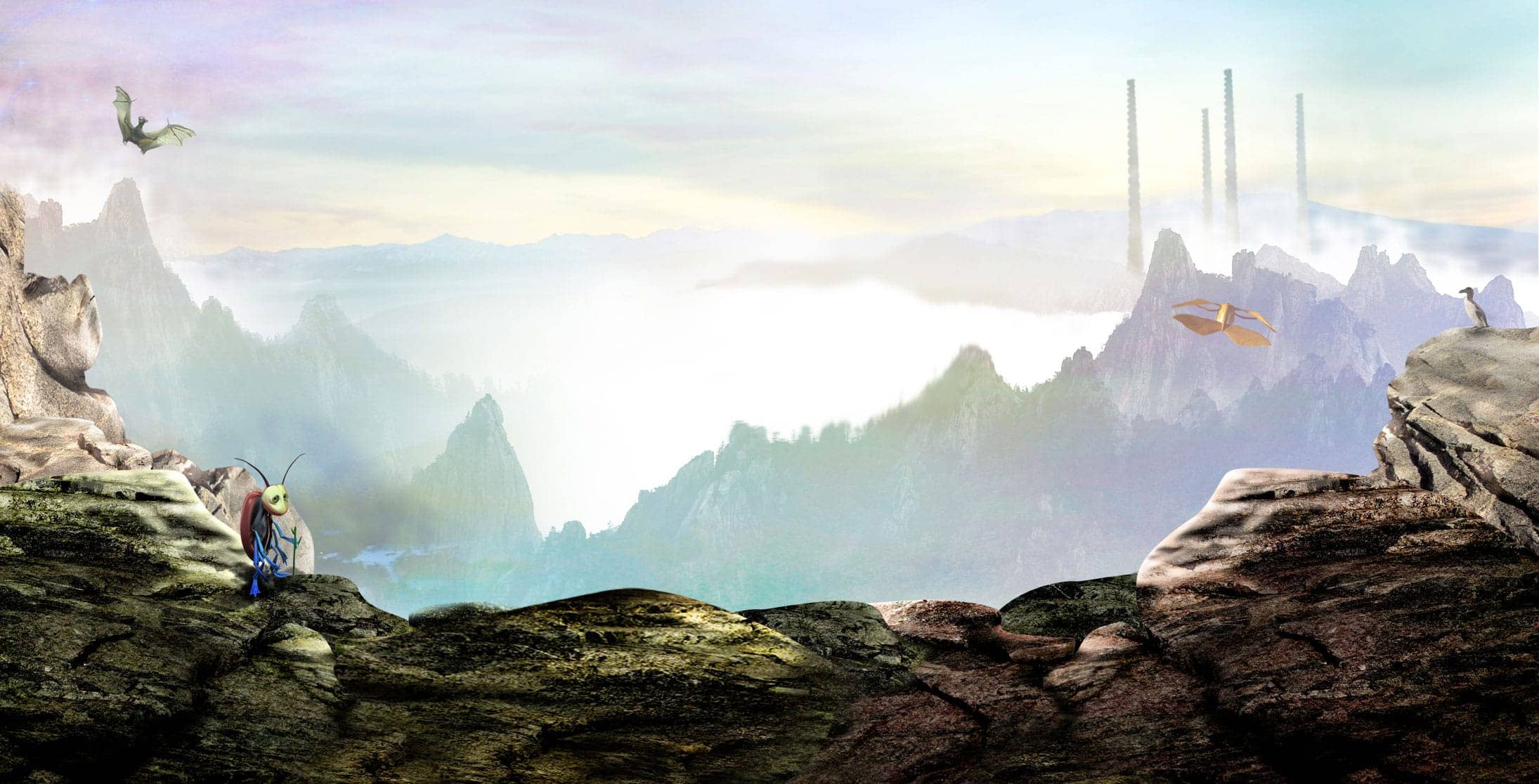
In Lost on Infinity, every creature carries a secret.
Biomimicry shows children something powerful. Evolution is not abstract. It produces real solutions to real problems.
A pangolin’s armour is not decoration. It is survival technology refined over millions of years.
Pangolins do more than fascinate wildlife lovers. They also inspire engineers and designers. Their scales are made of keratin. This is the same material as human fingernails. The scales overlap like roof tiles. This creates armour that is both strong and flexible.
When danger appears, the pangolin curls into a tight ball. The scales form a protective shield. Predators struggle to bite or claw through it. Scientists study this structure carefully. The scale pattern spreads force across the body. It absorbs impact while allowing movement.
Researchers now apply these ideas to human design. Pangolin-inspired structures influence protective clothing, flexible armour, and impact-resistant materials.
Nature solved this engineering challenge long ago. Humans are still learning from it.
💚🎶📚💚🎶📚💚🎶📚💚🎶📚💚🎶📚💚🎶📚💚🎶📚💚🎶📚💚🎶📚💚🎶📚💚🎶📚💚🎶📚💚🎶📚
How does this connect to Rockford’s Rock Opera?
Nature’s life cycles echo themes of growth, survival, and transformation found throughout Rockford’s Rock Opera. Stories help children connect emotionally with the living world. Science deepens that understanding.
Discover more through story and song
 Get the Lost on Infinity illustrated book with free musical audiobook – a totally immersive experience.
Listen to the first part of the Lost on Infinity audiobook and watch the animated adventure FREE on Apple App Store and Google Play.
Download our FREE lesson plans and slides about Extinction and Biomimicry. We also have a selection of FREE classroom activities on our website.
For even more exploration of the natural world, tune in to our Stories, Science & Secrets podcast for kids. Join Matthew, Elaine, Steve Punt and special guests, as we delve into the fascinating world of biomimicry and the inspiring ways science learns from nature’s genius.
Every creature has a secret, and every life is precious.
💚🎶📚💚🎶📚💚🎶📚💚🎶📚💚🎶📚💚🎶📚💚🎶📚💚🎶📚💚🎶📚💚🎶📚💚🎶📚💚🎶📚💚🎶📚
About the creators
Elaine Sweetapple is an illustrator and co-creator of Rockford’s Rock Opera, writing about nature, biomimicry, and storytelling.
Matthew Sweetapple is a writer and producer of Rockford’s Rock Opera, focusing on adventure-led environmental narratives.
Steve Punt is a writer and broadcaster, known for his work across BBC radio and television, and co-creator of Rockford’s Rock Opera.