

709 New Animal Species – What Else Is Waiting to Be Found?
Our planet still holds many secrets.
Each year, scientists find animals that nobody has recorded before. Some hide in deep oceans. Others live in forests, caves or remote mountains.
In 2025, India added an amazing 709 animal species to its scientific records. This was the country’s highest annual total.
Of those animals, 483 were new to science. Scientists had never formally described or named them before. Another 226 species were already known elsewhere, but researchers had not recorded them in India.
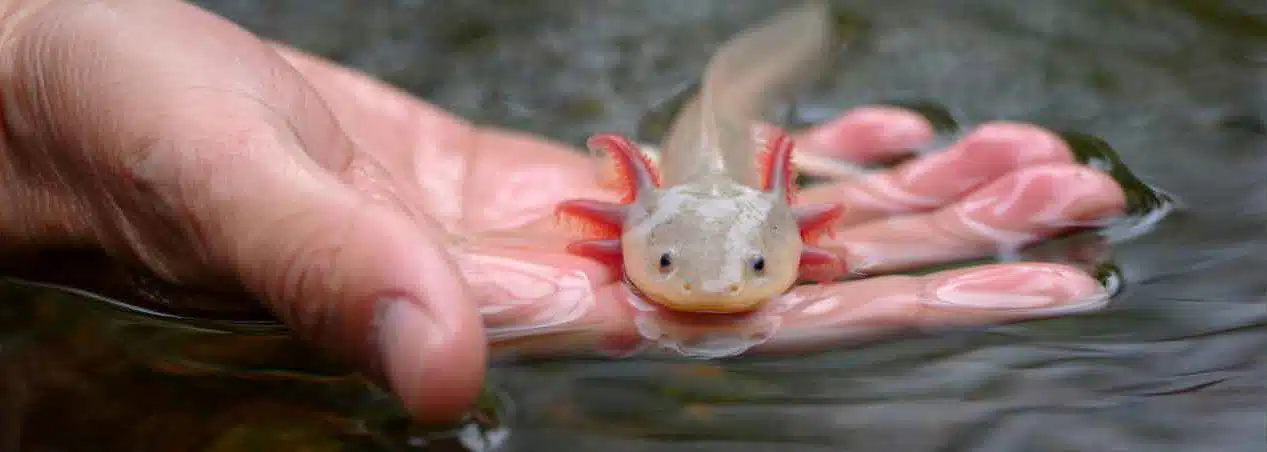
These discoveries included bats, snakes, lizards, spiders, fish and insects.
A record year for wildlife discoveries
India recorded 709 additions to its animal records in 2025. This included 483 species new to science and 226 species recorded in India for the first time.
The news raises an exciting question.
How many extraordinary creatures are still waiting to be found?
Nature still keeps many secrets
People sometimes think explorers found every type of animal long ago.
They did not.
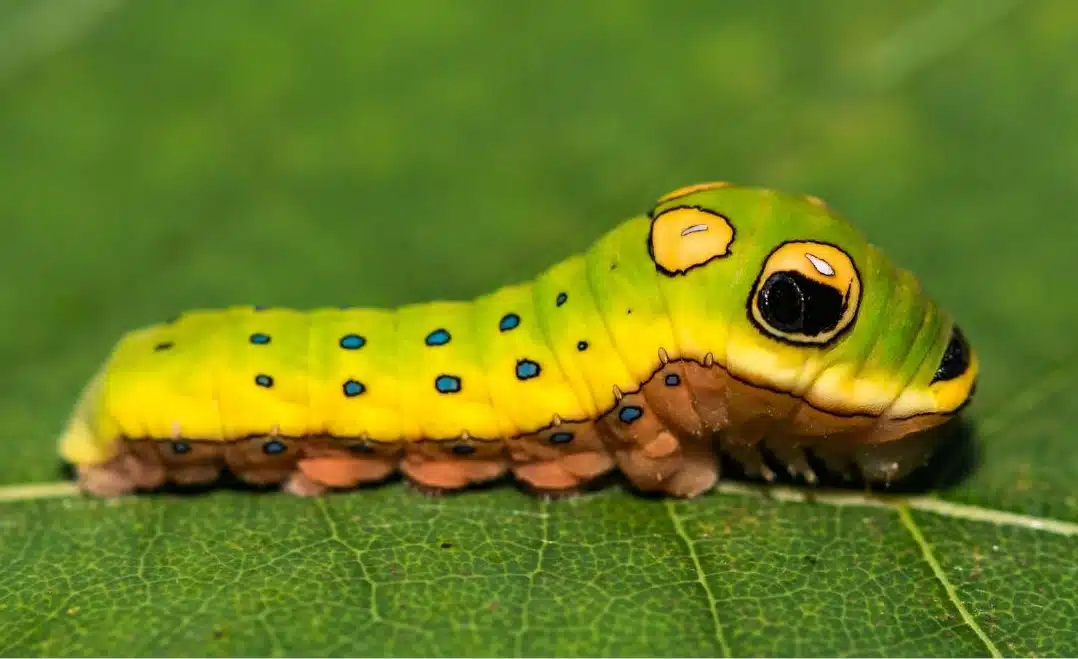
Scientists discover new frogs, spiders, insects, snakes, fish and lizards every year. Even museums can hold surprises. A specimen may sit in a drawer for decades before someone realises that it belongs to a different species.
Modern technology helps researchers spot those differences. They can study an animal’s body, behaviour and DNA. Together, these clues show whether it belongs to a known species or represents something new.
Small differences can matter. A snake may have a different scale pattern. A frog might make a unique call. One bat may use a different sound frequency from its closest relatives.
Each clue helps scientists build a clearer picture of life on Earth.
A new shark that walks
One of the most exciting recent discoveries is Dudgeon’s walking shark.
Scientists confirmed this new species in 2026. It lives in shallow waters near Milne Bay in Papua New Guinea.
The shark grows to about one metre long. Brown freckles, white marks and a dark eye-like patch decorate its body.
Unlike many sharks, it does not always swim to get around. Instead, it pushes itself across reefs with its fins. The movement looks like walking.
This small shark can explore shallow reef flats and rock pools. Its unusual way of moving helps it find food in places where larger sharks cannot easily swim.
Hopefully sharks are not likely to evolve to walk on land yet!
Did you know?
Dudgeon’s walking shark is the tenth known species of walking shark. Researchers have found it in only a small part of Papua New Guinea.
Its limited home may make it vulnerable to damage from fishing, climate change and the loss of healthy coral reefs.
Five amazing animals you may not know
1. Dudgeon’s walking shark
This small shark uses its fins to move across shallow reefs. Scientists confirmed it as a new species in 2026.
Special skill: Walking across the seabed.
2. The Great Nicobar wolf snake
This snake lives on Great Nicobar Island. Careful study showed that it differed from other wolf snakes.
Special feature: A distinct pattern of scales and markings.
3. The glass frog
Some glass frogs have skin so clear that you can see parts of their bodies through it.
Special feature: A partly transparent underside.
4. The leaf sheep
This tiny sea slug looks like a cartoon sheep. It eats algae and keeps working chloroplasts inside its body.
Special skill: Using stolen chloroplasts from algae.
5. The horseshoe bat
Horseshoe bats send out high sounds and listen for echoes. This lets them fly and hunt in darkness.
Special skill: Echolocation.
What exactly is a species?
Scientists sort living things into groups. One of the most important groups is a species.
A species usually means a group of living things that can breed with each other and produce healthy young that can also reproduce.
That definition works well for many animals. However, nature does not always fit neatly into boxes. Scientists may also study DNA, appearance, behaviour and where an animal lives.
Species in simple terms
A species is a distinct type of living thing.
Lions form one species. Tigers form another. Domestic dogs belong to the same domestic dog group, despite their many different shapes and sizes.
Scientists use physical features, behaviour and DNA to decide where one species ends and another begins.
What is a subspecies?
A species can contain separate populations. Over time, each population may develop its own features.
Perhaps one group lives in a cold northern forest. Another group may live far away in a warmer region. Distance can stop the groups from mixing very often.
Scientists may call these groups subspecies when they remain part of the same species but show clear and consistent differences.
A subspecies sits below species in scientific classification.
Species, subspecies and breeds
Species: A distinct type of animal, plant or other living thing.
Subspecies: A population within a species that has developed recognisable differences.
Breed: A variety of domestic animal shaped by human breeding. Labradors, pugs and Great Danes are breeds, not separate species.
Are all dogs one species?

A Chihuahua looks very different from a Great Dane.
One can fit into a small bag. The other may take up most of the sofa.
Despite those differences, every domestic dog breed belongs to the same domestic dog group. Labradors, dachshunds, poodles, spaniels and sheepdogs are not separate species.
Many scientists classify the domestic dog as a subspecies of the grey wolf. Its scientific name is often written as Canis lupus familiaris.
Dog breeds look different because people selected certain features over many generations. Humans bred some dogs for size. Others needed speed, strength, herding skills or a good sense of smell.
Underneath those differences, they remain closely related.
Why every dog depends on Rockford
This idea plays an important part in Lost on Infinity.
Infinity is home to the last ONE of every extinct species. When the last animal of a species disappears from Earth, it arrives on Infinity.
Rockford may look like one small dog, but he represents something much bigger.
When he gets checked in on Infinity, the system does not treat each dog breed as a separate species. It does not create one entry for pugs, another for Labradors and another for Great Danes.
If Rockford becomes extinct on Infinity, every dog disappears.
Suddenly, the fate of one character carries enormous weight.
Rockford’s story helps children understand extinction in a clear and personal way. Losing one species does not mean losing one individual animal. It means losing every member of that unique group.
Once a species has gone, we cannot simply replace it with something similar.
How many species disappear each year?
Nobody knows the exact number.
Scientists can confirm some extinctions. Yet many creatures disappear before anyone discovers or names them.
Researchers also need strong evidence before they declare a species extinct. Years can pass without a sighting. Experts must search its habitat and rule out every reasonable chance that some individuals survive.
That makes official extinction figures much lower than many estimates of the true loss.
Some experts estimate that between 200 and 2,000 species may disappear each year. This range comes from scientific models, not a complete count.
The honest answer remains simple. We cannot confirm exactly how many species become extinct each year.
Why is the number uncertain?
Scientists have not yet identified every species on Earth.
Many insects, fungi and deep-sea animals remain unknown.
A species could therefore disappear before anyone records its existence.
Why new discoveries matter
Each species forms part of a living system.
A tiny insect may pollinate a rare flower. One frog can help control insect numbers. A shark may keep a reef food chain in balance.
Remove enough pieces and the system can start to change.
New species also give us fresh ideas. Nature has spent billions of years finding ways to fly, swim, grip, cool, clean and protect.
People study those solutions through biomimicry.
Kingfisher beaks helped inspire quieter high-speed trains. Gecko feet have influenced new adhesives. Shark skin has inspired surfaces that reduce drag and discourage the growth of microbes.
Every newly discovered creature may hold another useful idea.
The race to find life before it disappears
Discovery brings excitement, but it can also bring concern.
Dudgeon’s walking shark appears to live in a very small area. A single change to its habitat could affect much of the known population.
Pollution can damage coral reefs. Rising sea temperatures add further pressure. Fishing may also harm animals with limited ranges.
Scientists need to find species before they can study or protect them.
That is why healthy habitats matter so much.
A protected forest gives wildlife room to survive. Clean rivers support fish, insects and amphibians. Strong coral reefs provide food and shelter for countless sea creatures.
Saving a habitat can protect species that we have not discovered yet.
Children make brilliant explorers
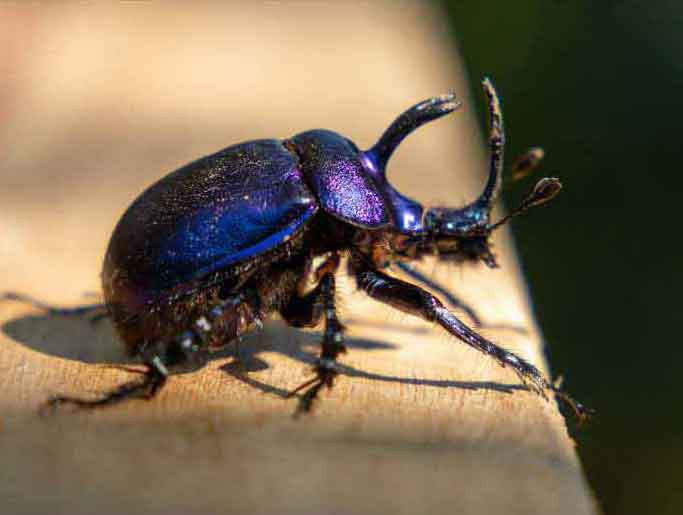 Children often notice things that adults overlook.
Why does that beetle shine?
How does a gecko climb a wall?
What makes an owl fly so quietly?
Questions like these sit at the heart of science.
Many researchers began by watching birds, looking under stones or studying creatures in a garden pond.
Curiosity does not need expensive equipment. It starts with looking closely.
Try this nature challenge
Choose one animal near your home. It could be a bird, beetle, spider or snail.
Watch how it moves.
Notice where it lives and what it eats.
Think about the problem its body helps it solve.
What could humans learn from it?
Discovering nature through Infinity
Lost on Infinity takes children to an island filled with extraordinary animals. Some creatures have vanished from Earth. Others face terrible danger. Each one has its own story.
Infinity may be imaginary, but its ideas come from the real natural world. Every species matters.
Each extinction removes a unique part of life on Earth. No other animal can provide an exact replacement.
New discoveries also remind us to stay hopeful. Scientists continue to find remarkable animals in forests, oceans and mountains. The next discovery may already be moving through a coral reef. Perhaps it hides beneath rainforest leaves. It might even sit inside a museum collection, waiting for a curious person to look again.
One of today’s children could become the scientist who finds it.

Discover more through our ecological adventure stories
Lost on Infinity is a musical adventure story that introduces children to extinction, biodiversity and biomimicry through storytelling and original songs.
Get the Lost on Infinity illustrated book with free musical audiobook – a totally immersive experience.
Listen to the first part of the Lost on Infinity audiobook and watch the animated adventure FREE on Apple App Store and Google Play.
Download our FREE lesson plans and slides about Extinction and Biomimicry. We also have a selection of FREE classroom activities on our website.
For even more exploration of the natural world, tune in to our Stories, Science & Secrets podcast for kids. Join Matthew, Elaine, Steve Punt and special guests, as we delve into the fascinating world of biomimicry and the inspiring ways science learns from nature’s genius.
Every creature has a secret, and every life is precious.
______________________________________________________________________
About the creators:
Steve Punt is a writer and broadcaster, known for his work across BBC radio and television, and co-creator of Rockford’s Rock Opera.
Matthew Sweetapple is a writer and producer of Rockford’s Rock Opera, focusing on adventure-led environmental narratives.
Elaine Sweetapple is an illustrator and co-creator of Rockford’s Rock Opera, writing about nature, biomimicry, and storytelling.
Rockford’s Rock Opera adventures are written by professional writers, illustrated by artists, and recorded by real musicians, actors and producers. Crafted by humans, the hard way 🎶😊💚