

To celebrate World Book Day we are offering a February Reader Discount.
With this link you can buy Lost on Infinity paperback with audiobook access
for just ✨£12.99 +p&p ✨ (RRP £14.99 +p&p)
Note: Offer available for month of February 2026 only
✨⭐️🎶💚✨⭐️🎶💚✨⭐️🎶💚✨⭐️🎶💚✨⭐️🎶💚✨⭐️🎶💚✨⭐️🎶💚
World Book Day celebrates children’s books, reading for pleasure, and the power of stories. It also gives families a moment to reflect on how children learn today and why reading still matters.
Many parents and teachers worry about screen time. Some screen use can be helpful. Too much passive use, however, affects attention, language development, and school performance.
Recent reporting in The Independent, for example, linked high screen use with lower educational outcomes in children. Researchers did not blame technology alone. Instead, they pointed to lost time for reading, talking, and deep thinking.
For this reason, World Book Day reminds us that books offer something screens often cannot.
How Reading Helps Children’s Brain Development
 Reading does more than teach words. It shapes how the brain develops.
You can read more about the science/research behind audiobook benefits in our Previous Blog.
When a child reads, several brain areas work together. Language, memory, and imagination all engage at once. Over time, these connections strengthen and support learning across subjects.
Research into reading and brain development shows a clear pattern. Children who read often develop stronger language skills and better comprehension. In turn, this supports writing, problem solving, and confidence at school.
Reading also trains attention. Stories unfold slowly. Children learn to follow ideas and hold information in mind. Short digital content rarely builds these skills
Reading vs Screen Time for Children
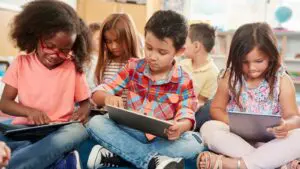
Screen time becomes a problem when it replaces other activities. Researchers call this the displacement effect. Time spent scrolling often replaces time for reading, family talk, or creative play.
Reading demands a different kind of effort. It stays active. Children imagine scenes, create voices, and build meaning as they go.
Because of this, educators continue to promote reading for pleasure. It supports focus, language, and emotional understanding in ways screens struggle to match.
Why Reading While Listening Helps Many Children
Some children find reading difficult. That does not mean they dislike stories.
Reading while listening helps bridge the gap. Research supports this approach. Children often understand more and feel more confident.
Hearing a story while following the text helps children:
• Hear how words are pronounced
• Understand sentence rhythm and flow
• Build vocabulary
• Focus on meaning rather than struggling with every word
As a result, this approach is especially helpful for:
• Reluctant readers
• Children with dyslexia
• Children learning English as a second language
• Children who need extra confidence
Because of this, research into audiobooks and literacy shows that listening does not replace reading. Instead, it supports it. When children read along with audio, decoding becomes easier and comprehension improves.
How Lost on Infinity Supports Reading and Learning
Lost on Infinity is a beautifully illustrated children’s book for readers aged 5 to 9. It is a fully dramatised adventure told through story and music.
Children everywhere connect with the natural world through stories. When they do, they begin to care about it. That care often lasts a lifetime.
Far away in the Sea of Tranquillity is the Island of Infinity, home to the world’s extinct creatures.
Infinity has a secret for the world, but Moog, a boy from Battersea in London, and Rockford, his dog,
are the only ones who can deliver its extraordinary message.
Our website has a collection of teaching resources for each chapter, and the themes include:
• animals and extinction
• friendship and responsibility
• complex ideas made accessible
• curiosity about the natural world, by learning from nature (biomimicry/biomimetics)
Each copy includes access to the full audiobook. Children can read while listening or listen first and return to the text later.
This format supports pronunciation and understanding. It also helps families with limited time or parents who feel unsure reading aloud.
Why Songs Help Children Learn
The audiobook includes original songs woven into the story.
Songs support learning. Rhythm and repetition help children remember language. Music also keeps attention high and makes reading feel playful.
For many children, singing along is the moment reading becomes enjoyable.
Together, reading, listening, and music turn learning into entertainment. Screens are not required.
World Book Day Reading at Home and School
World Book Day focuses on access to books and shared stories.
Reading at home matters. Reading in school matters. Family reading matters too. Books that combine print and audio solve real problems for modern families.
They support learning.
They reduce screen reliance.
They create shared family time.
✨⭐️🎶💚✨⭐️🎶💚✨⭐️🎶💚✨⭐️🎶💚✨⭐️🎶💚✨⭐️🎶💚✨⭐️🎶💚
World Book Day February Offer
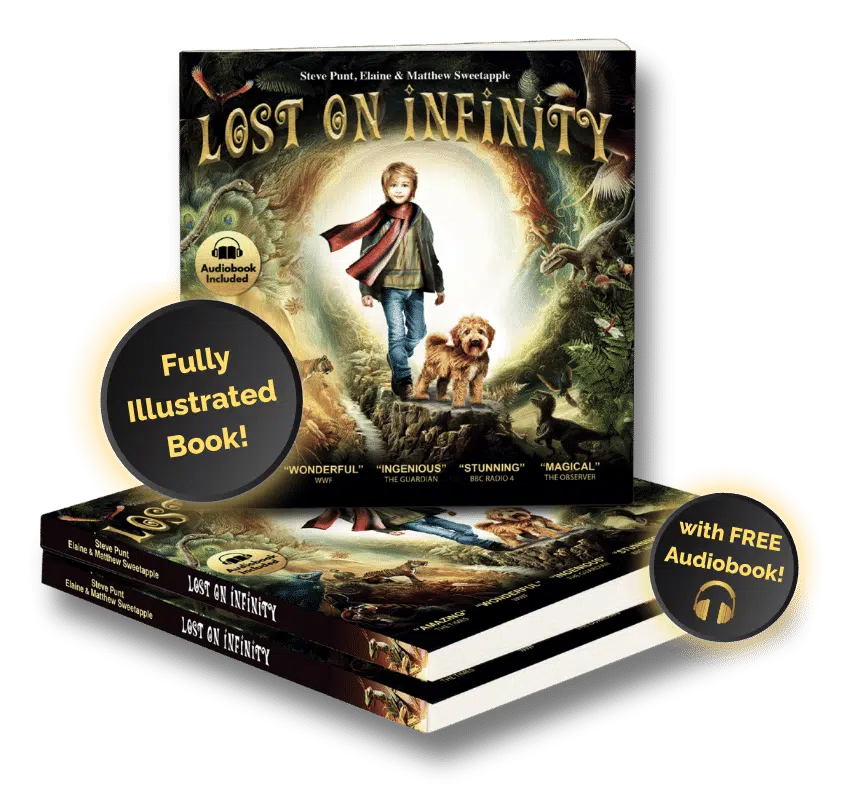 To celebrate World Book Day we are offering a February Reader Discount.
With this link you can buy Lost on Infinity paperback with audiobook access
for just ✨£12.99 +p&p ✨ (RRP £14.99 +p&p)
Anyone can order directly. No trade or publishing account needed.
If you’d like to buy extra copies for classrooms, please get in touch: rockford@sweetapple.co.uk
✨⭐️🎶💚✨⭐️🎶💚✨⭐️🎶💚✨⭐️🎶💚✨⭐️🎶💚✨⭐️🎶💚✨⭐️🎶💚
Download our wonderful Lost on Infinity apps
and education freebies too…
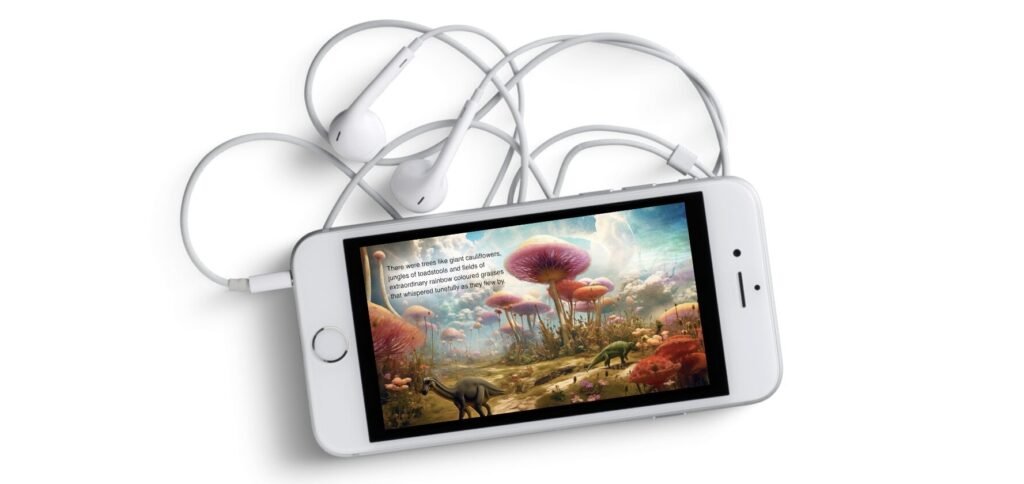 Listen to the first part of the Lost on Infinity audiobook and watch the animated adventure FREE on Apple App Store and Google Play.
Download our FREE lesson plans and slides about Extinction and Biomimicry. We also have a selection of FREE classroom activities on our website.
For even more exploration of the natural world, tune in to our Stories, Science & Secrets podcast for kids. Join Matthew, Elaine, Steve Punt and special guests, as we delve into the fascinating world of biomimicry and the inspiring ways science learns from nature’s genius.